
Ordina per:
245 prodotti
245 prodotti
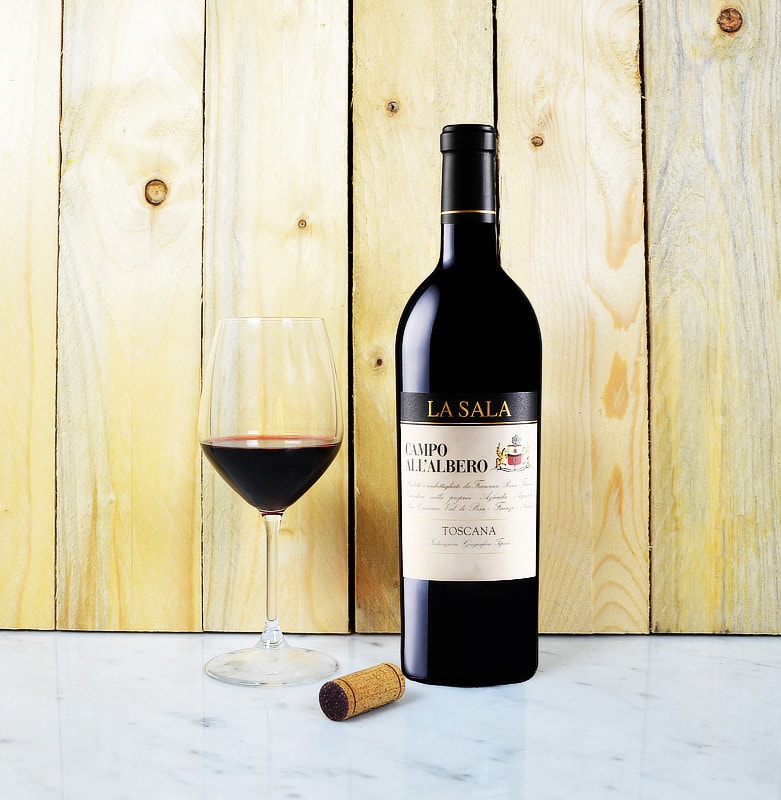
Campo all'Albero IGT La Sala, Note di degustazione:
Un vino di un intenso colore rubino, quasi granato, al naso si presenta con fini note di frutta matura, quasi cotta, come prugne, ciliegie acide, mirtilli e more. Intenso bouquet di spezie, pepe nero, incenso, cuoio e noce moscata che avvolgono il palato grazie a un tannino maturo, morbido e corposo.
Campo all'Albero IGT La Sala:
Un vino importante, 50% Merlot e 50% Cabernet Sauvignon con radici internazionali ma un'anima chiantigiana. La vinificazione avviene dopo la raccolta a mano per sottozone del vigneto. Macerazione per almeno tre settimane a una temperatura controllata sotto i 30°C. Maturazione in cantina per 24 mesi in barriques francesi a grana fine e a bassa tostatura di prima e seconda passaggio, seguita da 12 mesi in bottiglia.
Alla Sala
La Sala del Torriano ha antiche tradizioni, risalenti al 1200, ed è situata a San Casciano Val di Pesa, proprio nel cuore del Chianti Classico. Così è nato il progetto della nuova cantina, basato sul desiderio di produrre vini biologici di altissima qualità, realizzati con cura e dedizione nel massimo rispetto per l'ambiente.
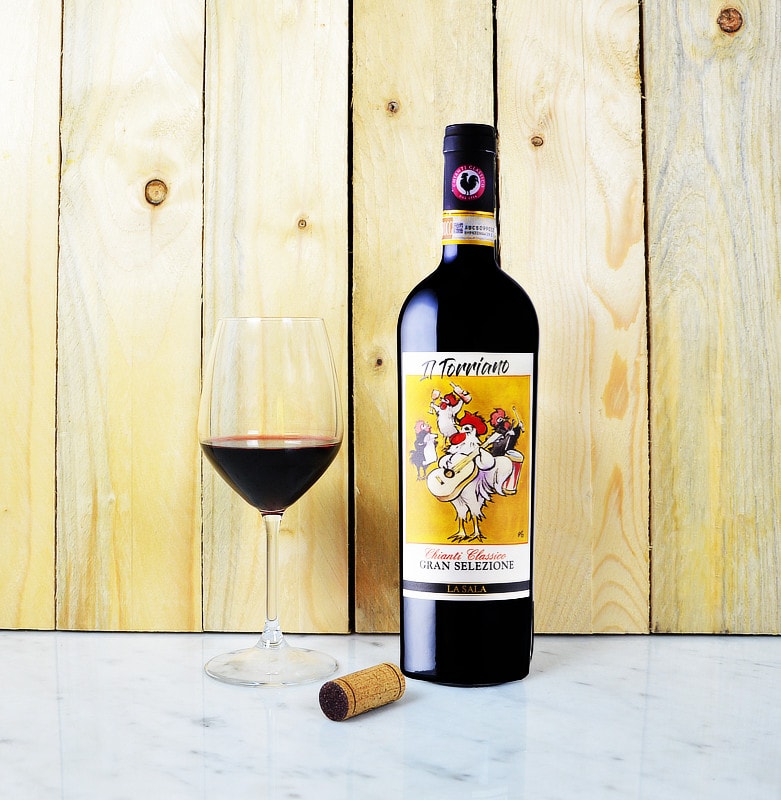
Chianti Classico DOCG Gran Selezione La Sala, Note di degustazione:
Vino di un brillante colore rubino, ricco bouquet al naso di ciliegia nera matura, sottobosco, prugne e marmellata di more. Intenso e morbido allo stesso tempo, grazie ai tannini maturi che avvolgono delicatamente il palato. Un vino che esalta le caratteristiche del Sangiovese, con grande struttura e facilità di beva. Finale lungo, saporito e speziato.
Chianti Classico DOCG Gran Selezione La Sala
"Chianti Classico Gran Selezione La Sala è un vino che si abbina perfettamente con carni rosse di selvaggina. 100% Sangiovese selezionato e raccolto a mano da un singolo vigneto di 1,5 ettari. La vinificazione inizia con l'uso di lieviti indigeni per la fermentazione, che dura circa due settimane. Macerazione per tre settimane a temperature controllate che non superano i 25°C. Dopo di che, un lungo invecchiamento di 36 mesi in una singola botte di rovere francese da 38hl non tostato. Invecchiamento in bottiglia minimo 6 mesi."
Alla Sala
La Sala del Torriano ha antiche tradizioni, risalenti al 1200, ed è situata a San Casciano Val di Pesa, proprio nel cuore del Chianti Classico. Così è nato il progetto della nuova cantina, basato sul desiderio di produrre vini biologici di altissima qualità, realizzati con cura e dedizione nel massimo rispetto per l'ambiente.
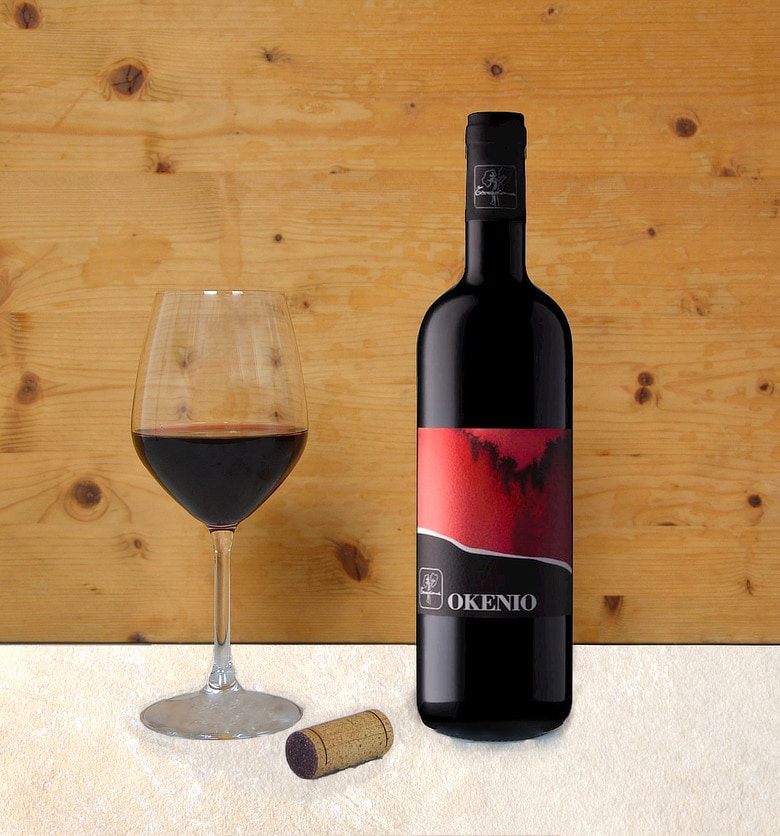
Val di Cornia DOC Okenio Terradonnà, Tasting notes:
An impenetrable ruby-red mantle, the elegant and powerful bouquet highlights blackberry and cassis against a background of humus and fern; it then hints at balsamic resins, coffee and cinnamon. It has a remarkable structure with dense tannins. The alcoholic component is properly integrated in the progression thanks to the contribution of a generous sapidity. The finish is persistent and elegant.
Okenio is the commander of the Terradonnà winery, the highest expression of the territory of Suvereto and the Val di Cornia in a pure cabernet sauvignon (100%). They have been producing this wine since 2002 and it has made them known in the world of enology. The high quality obtained with great tenacity and every year is the greatest challenge. Produced with manual selection of the best grapes in the vineyard, slow maceration in vitrified cement vats for 24 days, malolactic fermentation in French oak barriques where it remains for 14 months. Maturation in bottle for 30 months.
Label:
TERRADONNA OKENIO
Val di Cornia
Cabernet Sauvignon
CONTROLLED DESIGNATION OF ORIGIN
Entirely produced and bottled by the TERRADONNA farm - loc. Notri, 78 Suvereto (LI) - Italy
PRODUCED IN ITALY
15% VOL
CONTAINS SOLEFTI
Terradonnà
Terradonnà is located in Suvereto, in the Val di Cornia, a perfect area for wine production. A perfect area for wine production thanks to a soil particularly rich in minerals and a microclimate that, thanks to the recirculation of air from the sea (just a few kilometers away), maintains a mild climate all year round. The philosophy of the company stems from respect for the environment and the rhythms of nature. Firm in their desire to maintain the traditional cellar with cement tanks and wooden presses, they do not renounce innovation in winemaking techniques and research into methods of working to improve the life of the plants. Tradition and innovation coexist in Terradonnà.
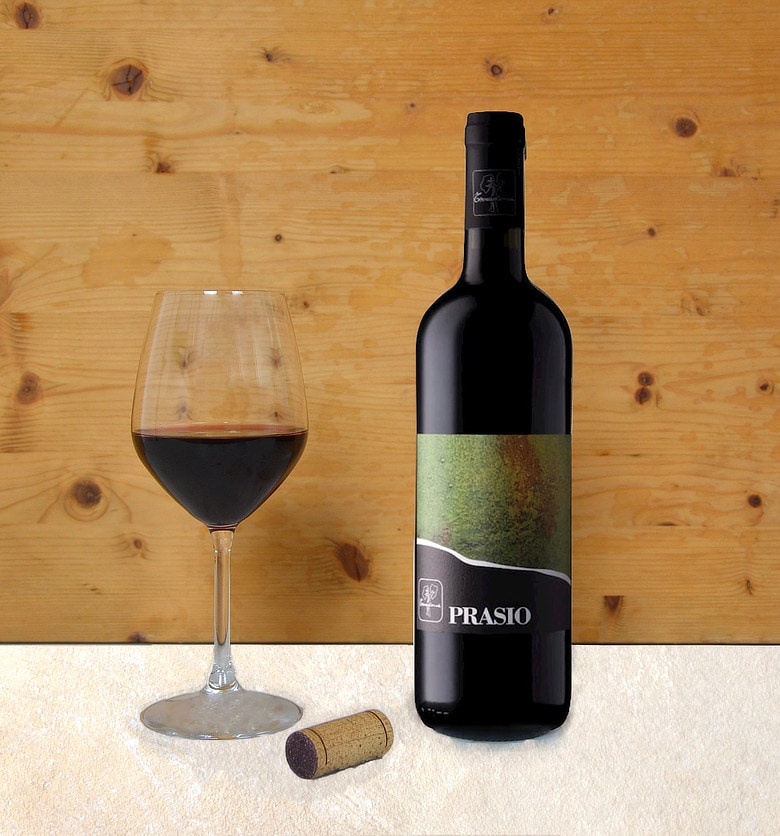
Prasio IGT Terradonnà, Tasting notes:
Intense ruby red colour, on the nose aromas of myrtle and eucalyptus emerge together with blueberry and blackcurrant berries, dark chocolate and a hint of leather and spices. In the mouth it is warm and soft, with good structure, velvety tannins and a long finish.
A blend of Merlot (50%) and Cabernet Sauvignon (50%) of Val di Cornia where international grape varieties have their highest expression. The result is a full-bodied but elegant wine, complex for its tertiary aromas that derive from the characteristics of the soil rich in clay and minerals.
Label:
TERRADONNA PRASIO
Terradonnà
TOSCANA ROSSO
TYPICAL GEOGRAPHICAL INDICATION
Grape varieties: Cabernet S. / Merlot
Entirely produced and bottled by the TERRADONNA farm - loc. Notri, 78 Suvereto (LI) Italy
PRODUCED IN ITALY
750 ml
15% vol
CONTAINS SULPHITES
Terradonnà
Terradonnà is located in Suvereto, in the Val di Cornia, a perfect area for wine production. A perfect area for wine production thanks to a soil particularly rich in minerals and a microclimate that, thanks to the recirculation of air from the sea (just a few kilometers away), maintains a mild climate all year round. The philosophy of the company stems from respect for the environment and the rhythms of nature. Firm in their desire to maintain the traditional cellar with cement tanks and wooden presses, they do not renounce innovation in winemaking techniques and research into methods of working to improve the life of the plants. Tradition and innovation coexist in Terradonnà.
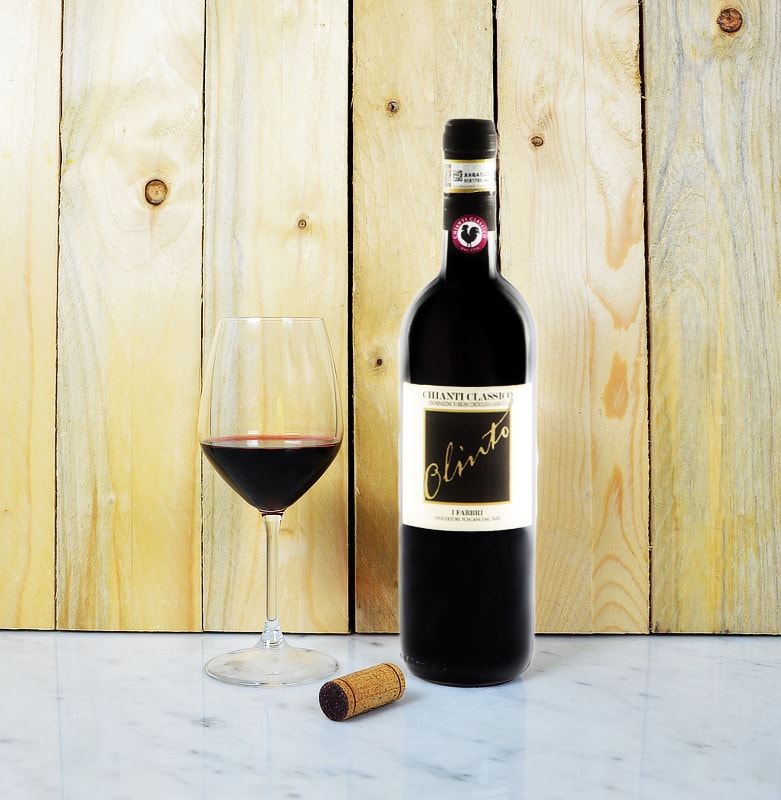
Chianti Classico DOCG Olinto I Fabbri, Note di degustazione:
Di un intenso rosso rubino, al naso si percepisce un vivace bouquet floreale con pieni sentori di frutta rossa; rotondo al palato con buona struttura, grande armonia e morbidezza, e una densa texture di tannini rotondi e piacevoli.
Chianti Classico DOCG Olinto
Maturati in serbatoi di cemento, le masse vengono assemblate prima dell'imbottigliamento, seguito da tre mesi di affinamento in bottiglia. Le forti variazioni di temperatura, l'esposizione al vento e la composizione del suolo conferiscono ai vini Fabbri e in particolare al suo Sangiovese caratteristiche organolettiche uniche e riconoscibili.
I Fabbri
I Fabbri si trovano nel Chianti Classico, il cuore del vino toscano. Con i suoi 700 metri di altitudine, Lamole è considerato il tetto del Chianti Classico. Nove ettari di vigneti, immersi in un magnifico ambiente collinare e circondati da aree boschive, qui i vigneti affondano le radici su terrazze centenarie con un anfiteatro naturale, esposte a sud, sud-ovest. Il territorio di Casole, Greve in Chianti, è una valle soleggiata e determinata che si caratterizza per una differenza altimetrica che oscilla tra i 450 e i 650 metri sul livello del mare. Le forti variazioni di temperatura, l'esposizione al vento e la composizione del suolo conferiscono ai vini dei Fabbri e in particolare al suo Sangiovese caratteristiche organolettiche uniche e riconoscibili. L'obiettivo de I Fabbri è preservare le risorse naturali e valorizzare le peculiarità del territorio. L'azienda è biologica, con certificazione. La conversione biologica è stata un processo naturale, senza forzature, con l'intento di adottare un rispetto sempre maggiore per la terra.
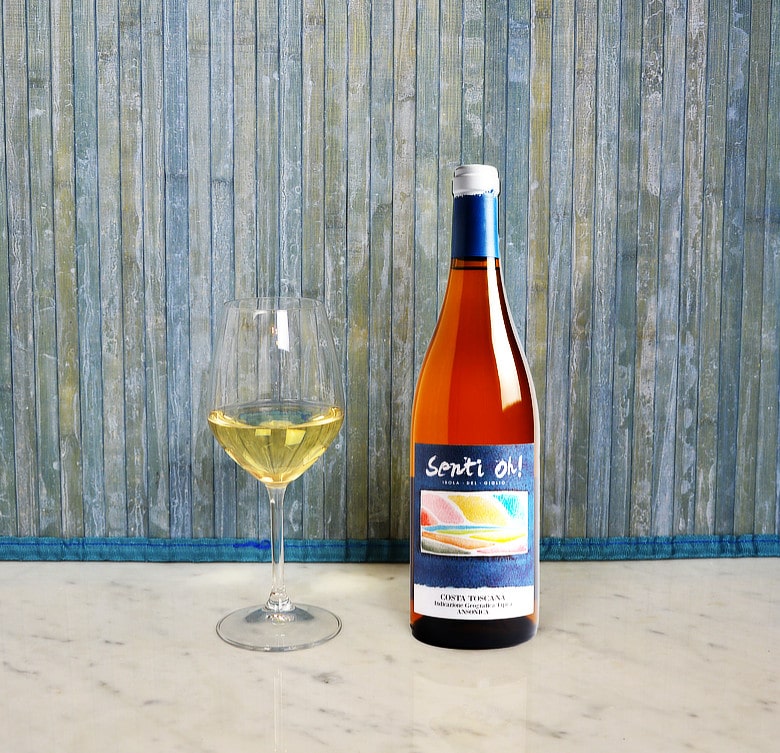
Senti Oh Fontuccia, Tasting notes:
At first glance, the intense, brilliant straw yellow colour is striking. Iodine and mineral are the basis of this wine, on which it has intense and clear scents of Apricot and Peach, pleasantly supported by floral notes of Chamomile.
Senti Oh Fontuccia
Made exclusively with ansonica grapes from the island of Giglio, grown in a few sunny hectares and overlooking the sea. The Senti Oh! it is a perfect synthesis between tradition and trend. The first wine of the company, it is the beginning of the journey during which Fontuccia has been listening to the places and people who have dedicated everything on the island life to their passion, to that viticulture that today we call “heroic”.
Fontuccia
Fontuccia dedicated everything to the island life and their passion is infinite, which viticulture today calls “heroic”. An archaic knowledge that they have chosen to protect, enhancing specificities and the beauty of their territory with this wine. They are one of the very few winegrowers on the island of Giglio. Heroic viticulture because their vineyards are small terraces on granite rocks overlooking the sea. The harvest is done by hand, as it was 80 years ago because even the use of tractors is impossible.
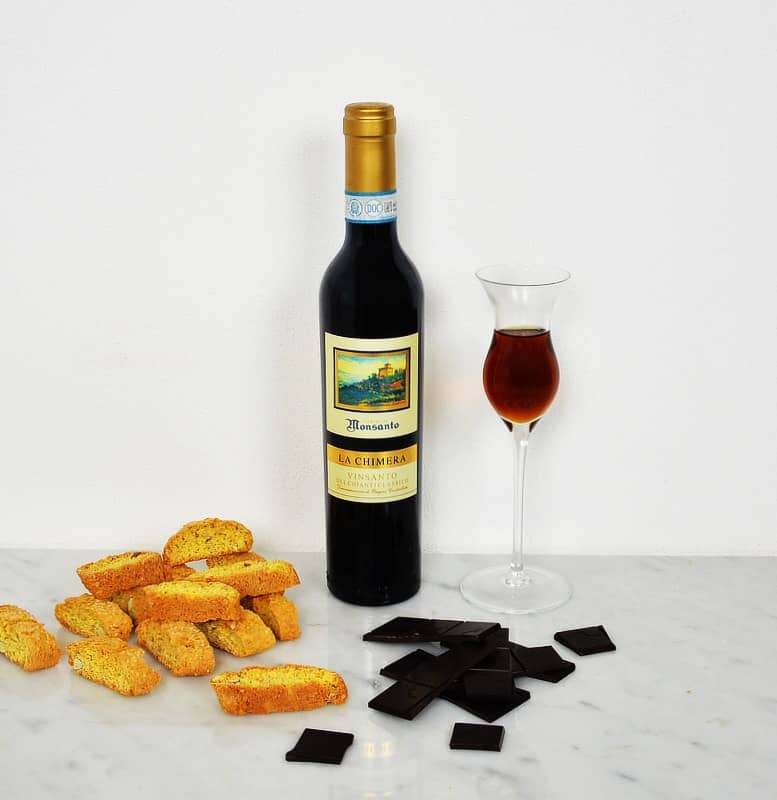
Vin Santo Occhio di Pernice del Chianti Classico DOC Castello di Monsanto
€79,00
Prezzo unitario perVin Santo Occhio di Pernice del Chianti Classico DOC Castello di Monsanto
€79,00
Prezzo unitario perVin Santo del Chianti Classico DOC Castello di Monsanto, Tasting notes:
The wine is amber in color, with notes of dried fruit, melted butter, toasted almonds and candied fruit on the nose. The palate is sensual, elegant, balanced and robust, with a very persistent finish.
Vin Santo del Chianti Classico DOC
Castello di Monsanto's Vinsanto is produced according to the strictest tradition: that is, leaving the must for the caratelli exposed both in summer and winter to the weather of the vinsantaia. No technological support, just endless passion for a great Chianti tradition.
Castello di Monsanto
There are two places at Castello di Monsanto that capture every visitor for the charm and the magic that is perceived: the Poggio’s hill and the historic cellar. Being able to transmit at least a tenth of the emotions you experience visiting the Monsanto winery is very difficult. The aromas, the echoes, the silences, the layers of noble molds make it a unique place that deserves at least one visit. The company has its origin from here. So from a climb on the Poggio and from a descent into the cellar, the idea of making a Cru in Chianti Classico was born for the first time. It was 1962 when the first 6,000 bottles of the Chianti Classico Riserva Il Poggio were produced. Of the 72 hectares planted with vineyards, between 260 and 310 meters s.l.m., 56 ha are in Sangiovese, the vine in which the company has deeply believed from the beginning. The Sangiovese clones present in the vineyards come from a mass selection of vines found in the vineyard Il Poggio, “the mother” of all the vineyards of Monsanto. In a small percentage are then present the two historical vines of the Chianti Classico vine: Canaiolo and Colorino.
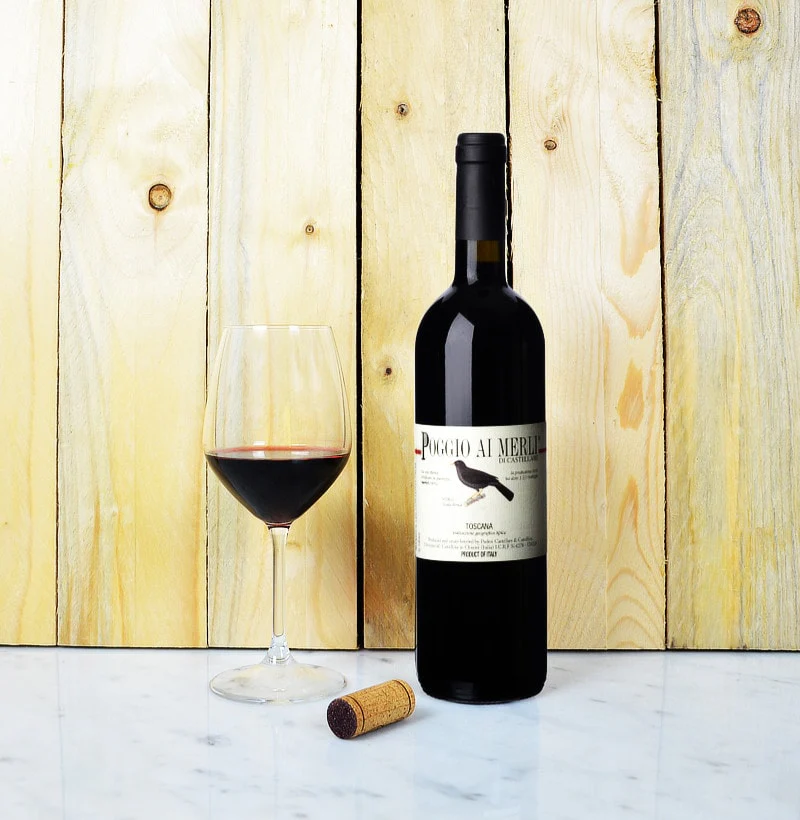
Poggio ai Merli IGT Castellare di Castellina, Tasting notes:
Is complex and the hints of black fruit (blackberry and blueberry in particular) clearly prevail. Raspberry, morello cherry, blackberry and plum, followed by roasted notes of cocoa, vanilla and coffee. On the palate is soft and enveloping, with fine and elegant tannins. Warm, soft and very balanced The finish is long and harmonious with a distinct fruity aftertaste.
Tuscany is a land of excellence for Merlot. Castellare merlot, thanks to the special location of the vineyard, has a rare personality. Since the first vintage it was defined as a monument to wine excellence.
Label:
POGGIO AI MERLI DI CASTELLARE
TUSCAN
Typical geographical indication
Castellare di Castellina (Nettuno srl) Produced and bottled by Castellina in Chianti (SI) - ITALY
PRODUCED IN ITALY
14.5% vol.
Contains sulphites
75 cl
Castellare di Castellina
The producer, the very famous and renowned company Castellare di Castellina is in fact one of the most historic, working to defend these centuries-old traditions. Castellare di Castellina was born from the union of four farms. Those were the 70’s when the so-called Renaissance of the Italian wine had begun. A Renaissance to which Castellare was able to give its own contribution, keeping together tradition and innovation.
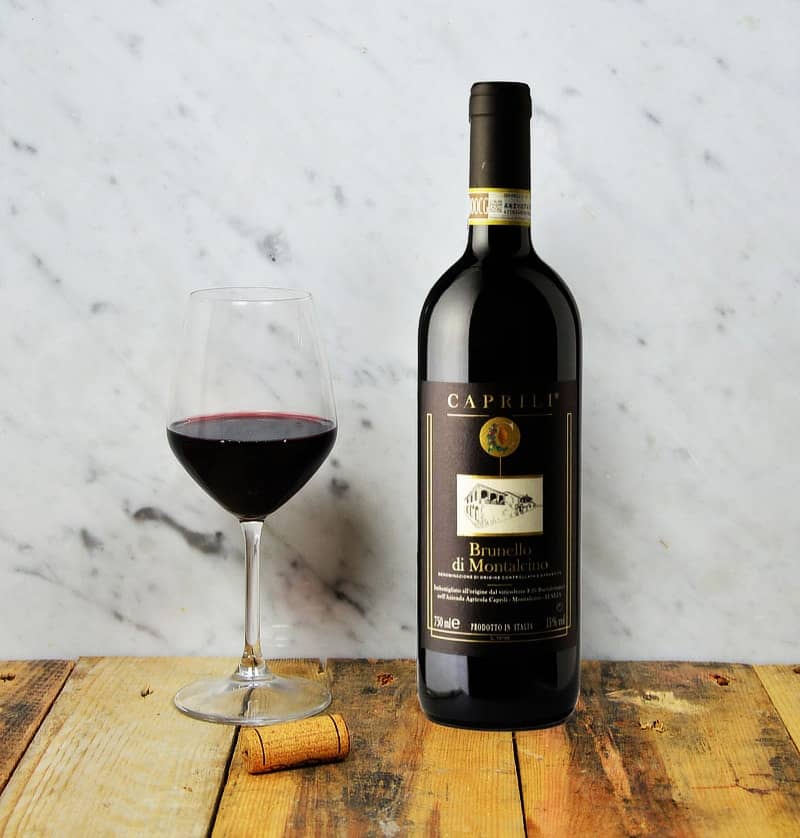
Brunello di Montalcino Caprili, Note di degustazione:
Morbido e meno tannico rispetto alla Riserva, il Brunello ha un colore intenso, ampi aromi con note di frutti rossi. Al palato offre un corpo ben bilanciato con tannini ben amalgamati nella struttura, che garantiscono eleganza e longevità.
Sangiovese di Montalcino
La Toscana è la patria del vino rosso, in particolare del sangiovese.
Il Sangiovese grosso ha trovato a Montalcino un terroir speciale che, combinato con l'esperienza dei viticoltori, ha creato un prodotto leggendario famoso in tutto il mondo per le sue qualità.
Caprioli
L'azienda Caprili è stata fondata nel 1965 da Alfo Bartolomei e la prima bottiglia di Brunello di Montalcino Caprili è la vendemmia del 1978, introdotta sul mercato nel 1983. I vigneti sono allevati a cordone speronato, si trovano ad un'altitudine che varia da 225 a 340 m sul livello del mare. L'esposizione a sud-ovest dell'azienda, che guarda verso il mare, beneficia dell'azione mitigante dei venti che evitano l'umidità stagnante che può causare attacchi fungini ai vigneti. Pertanto, le uniche interventi si basano su sostanze di contatto come rame e zolfo. La vinificazione segue i processi naturali favorendo l'uso di lieviti autoctoni, contenuti nelle stesse uve, questo conferisce al vino una propria precisa identità territoriale, facilmente riconoscibile e tracciabile. Ma allo stesso tempo mai omologato nel gusto e nei profumi, piuttosto seguendo la variabilità della tendenza stagionale delle vendemmie, ed esprimendo la loro particolarità. L'azienda Caprili copre un'area di 58 ettari, a sud-ovest del territorio nel comune di Montalcino, sul versante della collina che degrada verso i fiumi Orcia e Ombrone. L'area vitata è di 15,5 ettari di cui 14,5 sono coltivati a Sangiovese Grosso da cui si ottengono Brunello di Montalcino DOCG e Rosso di Montalcino DOC.
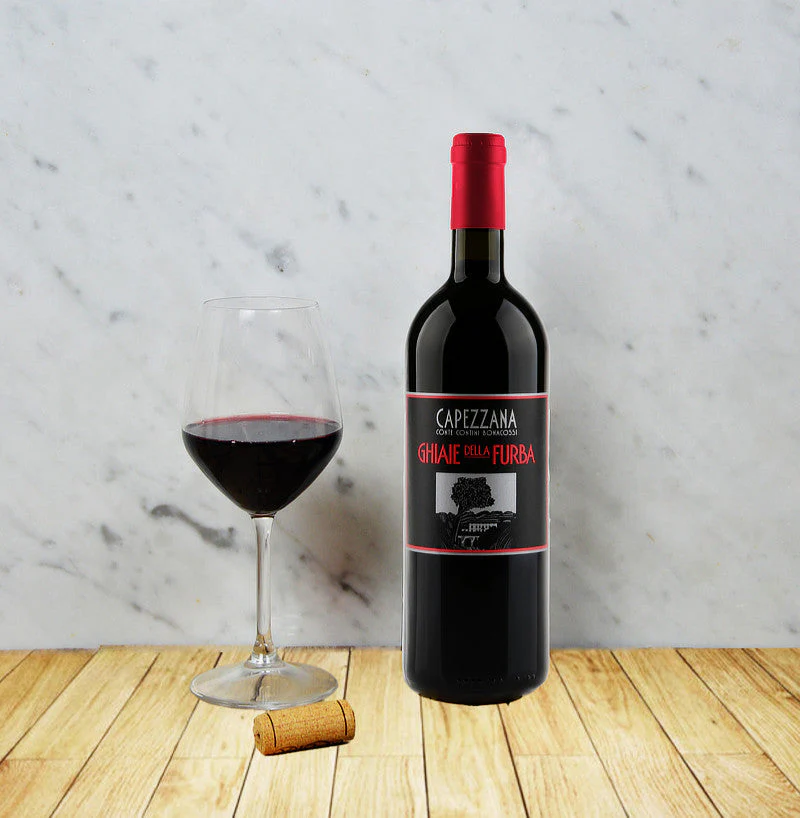
Ghiaie della Furba Capezzana, Note di degustazione:
Molto intenso, quasi impenetrabile rosso rubino. Ampio, complesso, elegante, fine, dolce, fruttato con intense note speziate. Morbido, strutturato, grande volume, con tannini densi e dolci, acidità in equilibrio con la struttura. Lungo, persistente, retrogusto fruttato con sensazioni gustative di piccole bacche rosse del sottobosco unite a intense e complesse note speziate.
Capezzana Red wine
Questo vino è nato da un'idea di Ugo Contini Bonacossi nel 1979 con l'intenzione di produrre, a Carmignano, un vino con uve Bordeaux.
Capezzana
A Capezzana lo sanno bene, producono vino dal 802, non dal 1802. Se stai cercando la formula magica che rende i loro vini così speciali, la troverai nella grande diversità del suolo e dell'orientamento di ogni vigneto che creano una biodiversità estrema e fantastica.
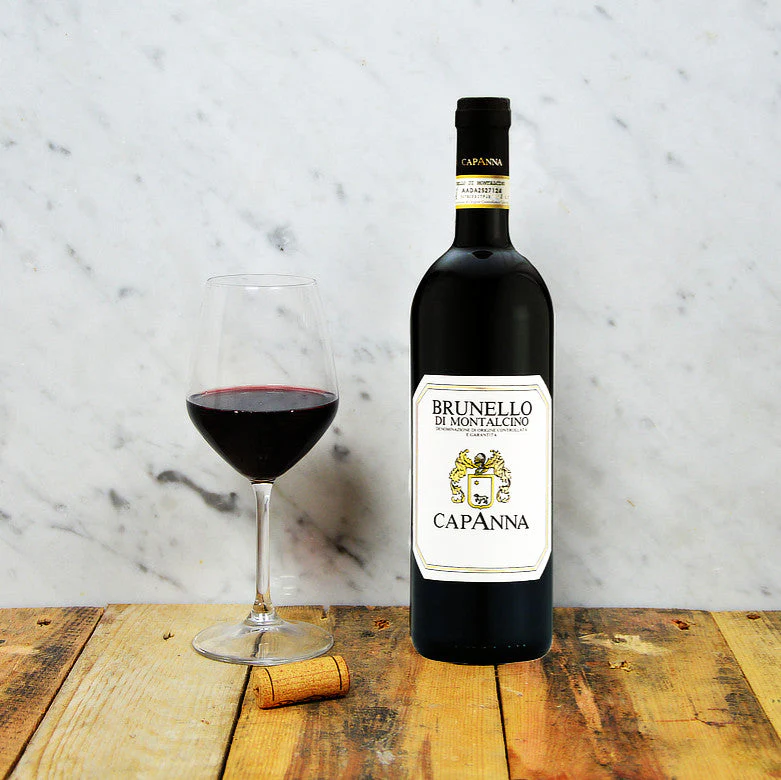
Brunello di Montalcino DOCG Capanna, Note di degustazione:
Colore rosso rubino intenso con riflessi granato. Ha un bouquet etereo di frutti rossi e vaniglia, persistente. Armonioso al palato, con ottimi tannini e struttura, molto persistente.
vino Brunello di Montalcino
Brunello di Montalcino Capanna da uve 100% Sangiovese dei vigneti più antichi. Abbinamenti gastronomici: carni rosse arrosto, selvaggina, formaggi stagionati.
Capanna
Azienda Capanna è uno dei produttori più storici di questo vino a Montalcino.
Brunello, Rosso e Moscadello sono i loro prodotti di punta.
La cantina Capanna, di proprietà della famiglia Cencioni dal 1957, si trova nella zona di Montosoli, a nord di Montalcino. Fondata da Giuseppe Cencioni; già negli anni '60 iniziò a imbottigliare i propri vini e, dopo il riconoscimento del Brunello di Montalcino DOC nel 1966, Giuseppe fu uno dei 25 fondatori del Consorzio del Vino Brunello di Montalcino.
La produzione, inizialmente di alcune migliaia di bottiglie, è aumentata successivamente con la piantagione di nuovi vigneti. Nel 1975 è iniziata l'esportazione del Brunello di Montalcino DOC – Capanna 1970 – in Germania; negli anni successivi sono stati raggiunti nuovi mercati: Stati Uniti d'America, Canada, Svizzera, Belgio, Olanda, Giappone, Austria, Polonia, Danimarca e altri.
La cantina Capanna è ancora gestita esclusivamente dalla famiglia: inoltre, è lo stesso Amedeo Cencioni, figlio di Patrizio e rappresentante della quarta generazione, a sovrintendere al lato enologico e agronomico della cantina.
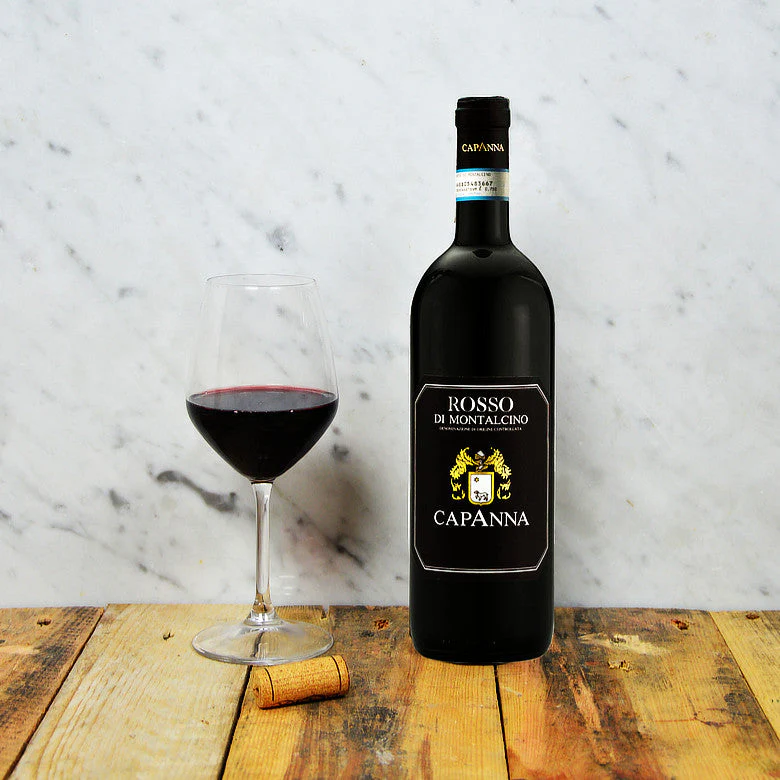
Rosso di Montalcino DOC Capanna, Tasting notes:
Intense ruby colour, it has a fresh bouquet, with notes of red fruit and vanilla. On the palate it is noted for its good structure, slightly tannic, persistent.
Montalcino red wine
Rosso di Montalcino DOC Capanna is a classic 100% Sangiovese wine from Montalcino. Goes perfectly with pasta with meat sauce, roast white and red meat, mushrooms, cold meats and cheeses. Vinification takes place with alcoholic fermentation with maceration of the skins (18-20 days) at controlled temperature and spontaneous malolactic fermentation, both in truncated conical Slavonian oak vats. Refinement in Slavonian oak barrels from 20 to 32 hl for 6-10 months; followed by refinement in the bottle for at least 3-4 months.
Capanna
Azienda Capanna is one of the most historic producers of this wine in Montalcino.
Brunello, Rosso and Moscadello are their top products.
The Capanna winery, owned by the Cencioni family since 1957, is located in the Montosoli area, north of Montalcino. Founded by Giuseppe Cencioni; already in the 1960s he began bottling his own wines and, after the recognition of Brunello di Montalcino DOC in 1966, Giuseppe was one of the 25 founders of the Consorzio del Vino Brunello di Montalcino.
Production, initially a few thousand bottles, later increased with the planting of new vineyards. In 1975, the export of Brunello di Montalcino DOC – Capanna 1970 – to Germany began; in the following years, new markets were reached: United States of America, Canada, Switzerland, Belgium, Holland, Japan, Austria, Poland, Denmark and others .
The Capanna winery is still run exclusively by the family: moreover, it is Amedeo Cencioni himself, Patrizio’s son and representative of the fourth generation, who oversees the oenological and agronomic side of the winery.
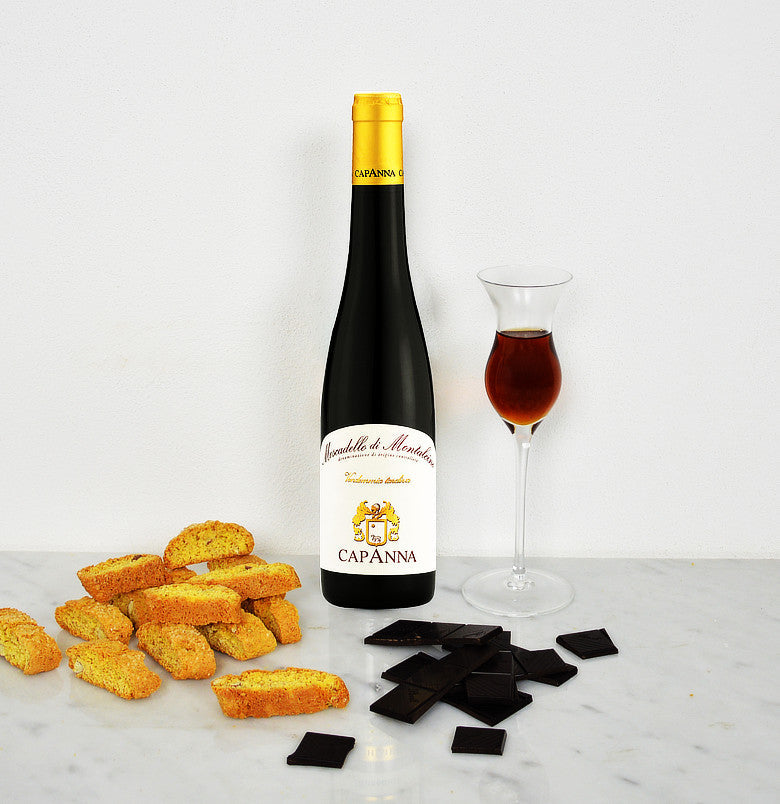
Moscadello di Montalcino DOC Vendemmia Tardiva Capanna, Tasting notes:
Has an intense golden colour. The nose immediately recognises an intense aroma of acacia honey, apricots, pears and candied fruit; noteworthy because it is extremely persistent. on the palate it is sweet, but well balanced by acidity, well structured and pleasant, complex and with a characteristic aftertaste.
Capanna
Azienda Capanna is one of the most historic producers of this wine in Montalcino.
Brunello, Rosso and Moscadello are their top products.
The Capanna winery, owned by the Cencioni family since 1957, is located in the Montosoli area, north of Montalcino. Founded by Giuseppe Cencioni; already in the 1960s he began bottling his own wines and, after the recognition of Brunello di Montalcino DOC in 1966, Giuseppe was one of the 25 founders of the Consorzio del Vino Brunello di Montalcino.
Production, initially a few thousand bottles, later increased with the planting of new vineyards. In 1975, the export of Brunello di Montalcino DOC – Capanna 1970 – to Germany began; in the following years, new markets were reached: United States of America, Canada, Switzerland, Belgium, Holland, Japan, Austria, Poland, Denmark and others .
The Capanna winery is still run exclusively by the family: moreover, it is Amedeo Cencioni himself, Patrizio’s son and representative of the fourth generation, who oversees the oenological and agronomic side of the winery.
Montalcino passito wine
Moscadello di montalcino, the Passito wine par excellence of the val d’orcia.
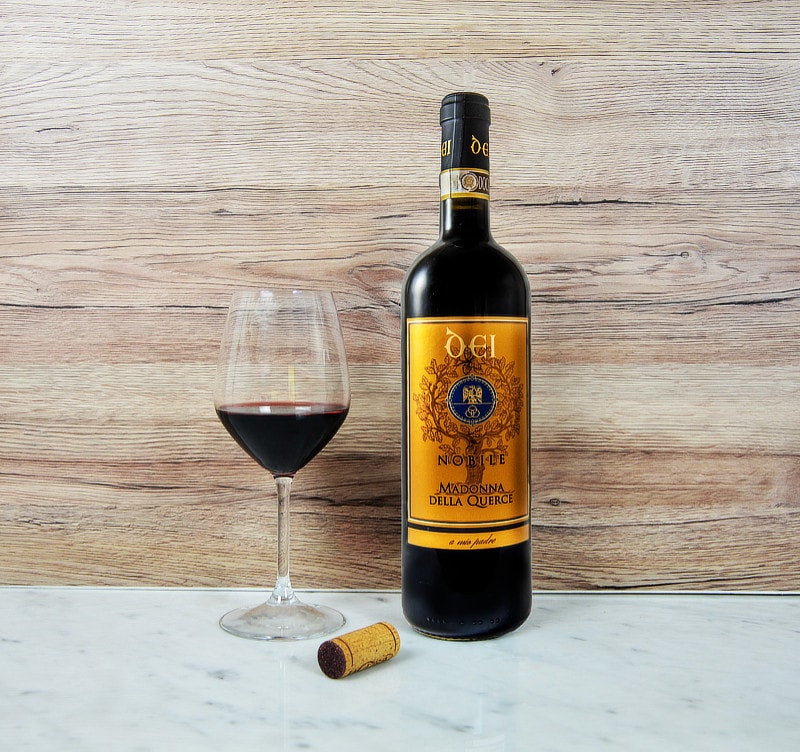
Nobile di Montepulciano DOCG Madonna della Querce Cantine Dei, Tasting notes:
Intense and deep ruby red colour. It has a broad and fascinating nose. Varietal notes dominate, with ripe red fruit and jams, all accompanied by the spicy scent of wood, which remains in the background. The olfactory-gustatory link is perfect. In the mouth it is ethereal, long and mineral, the tannins are well made, dense and elegant. A deeper analysis reveals a medium alcohol content and excellent levels of acidity and extractive substances. A wine that stands out above all for its elegance and refinement.
Cantine Dei
Cantine Dei is known as one of the best wine producers of Montepulciano. Every year their wines are awarded and recognized by critics as excellent.
At the Dei estate, arts merges with wine. Their cellar is the perfect example of how architecture and winemaking are working together for a stunning result.
Their wine are all based on the local Sangiovese production and their Nobile wine are among the best of the region.
Nobile di Montepulciano
Vino Nobile di Montepulciano DOCG Madonna della Querce Cantine Dei is the best Cantine Dei Wine. Caterina Dei, the owner, considers this wine to be the jewel in the crown of the entire production, which is why he has decided to dedicate it to his father Glauco: at the bottom of the label, we read “to my father”, a fitting tribute to the figure who was the reference point for the growth of the company. In 2015 the vineyard from which the grapes come from reached maturity and consequently today all the requirements are in place to obtain a great wine with long aging potential.
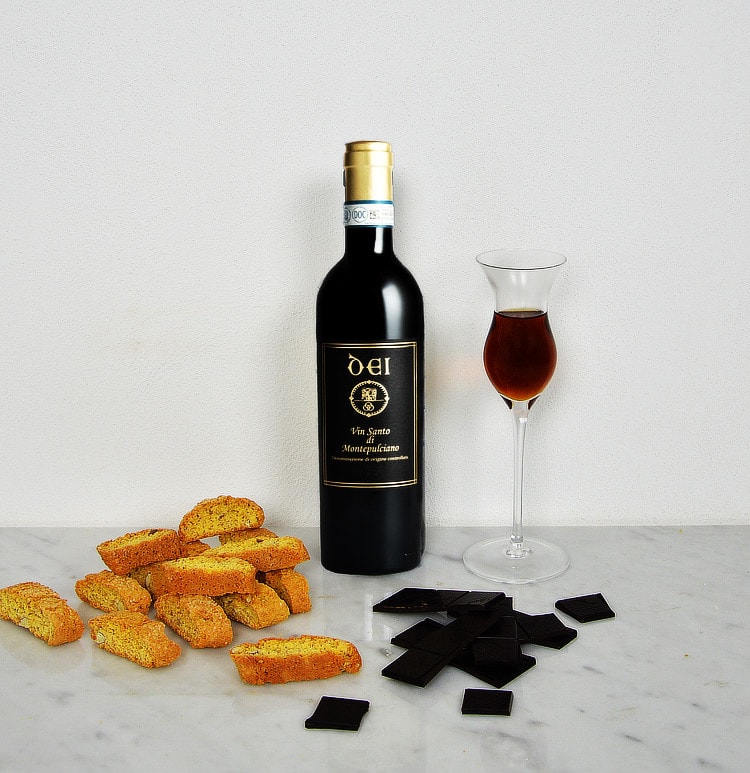
Vin santo di Montepulciano Cantine Dei, Tasting notes:
Golden yellow in colour with amber highlights, it has a wide range of aromas with hints of candied fruit, almond paste, acacia honey and apricot. In the mouth it is pleasantly sweet but balanced by an excellent freshness.
Cantine Dei
Cantine Dei is known as one of the best wine producers of Montepulciano. Every year their wines are awarded and recognized by critics as excellent.
At the Dei estate, arts merges with wine. Their cellar is the perfect example of how architecture and winemaking are working together for a stunning result.
Their wine are all based on the local Sangiovese production and their Nobile wine are among the best of the region.
Vin Santo from Montepulciano
Following the Chianti tradition, also in Montepulciano the sweet passito wine is called "Vin Santo".
Vin santo wine from Montepulciano is perfect to end your meal, dipping Cantucci in it. Or as a meditation wine.
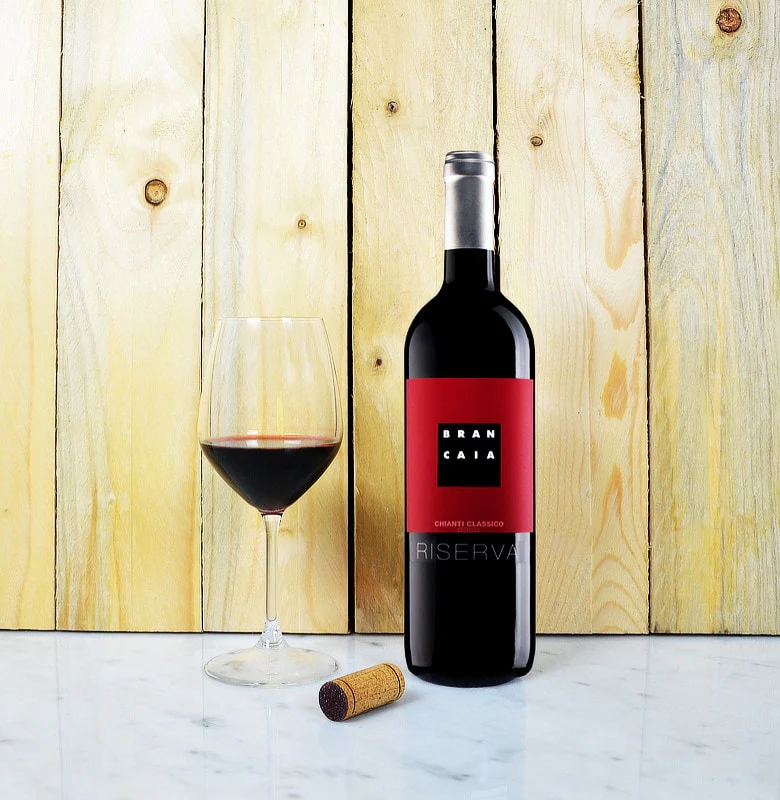
Chianti Classico DOCG Riserva Brancaia, Note di degustazione:
Ha un sapore rotondo, con sentori di ciliegia, spezie, cuoio e cioccolato.
Brancaia, cantina in Chianti e Maremma
La storia di Brancaia è iniziata nel 1980 quando la famiglia Widmer, di origine svizzera, acquistò il Podere Brancaia a Castellina in Chianti come residenza estiva in Toscana. Bruno e Brigitte Widmer decisero di produrre solo vini della massima qualità. Ciò che iniziò come un hobby, nel corso degli ultimi 40 anni è cresciuto costantemente fino a diventare una delle cantine più importanti della Toscana. Brancaia ama e rispetta profondamente le tradizioni del passato, ma allo stesso tempo non ha paura di immaginare approcci nuovi e moderni e la viticoltura biologica è sempre stata centrale per Brancaia.
Chianti Riserva Brancaia, vino iconico
Il Chianti Classico Riserva Brancaia è prodotto con le migliori uve Sangiovese. Questo vino ben strutturato mostra l'eleganza e il fascino di questa classica varietà di uva toscana e non tradisce le alte aspettative di questa storica denominazione.
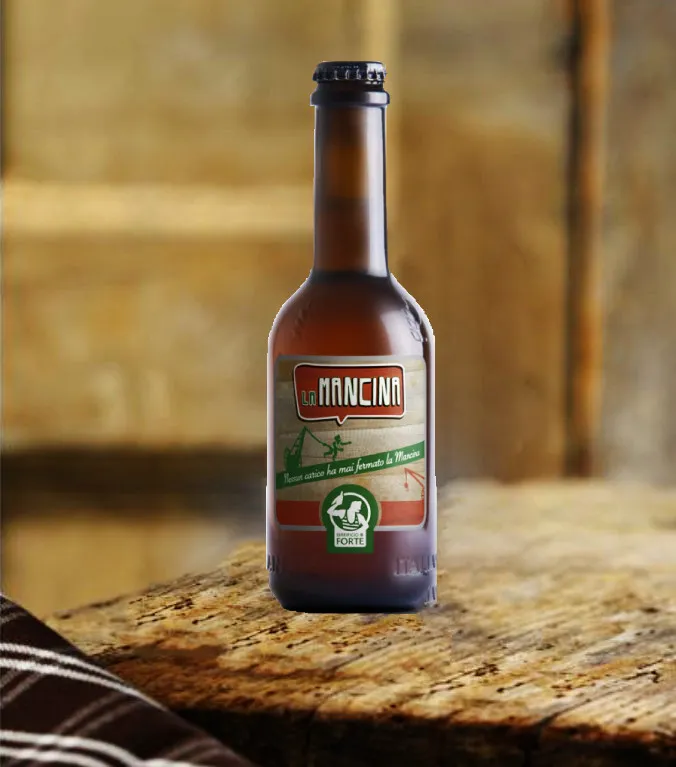
La Mancina Birrificio del Forte, Tasting notes:
Clear with golden hues, it has intense aromas of ripe fruit (peach, apricot, pear and pineapple) and a slight spicy tone given by the Belgian-style yeast. The taste, characterised by sweet notes, is accompanied by light hopping which contributes to its unexpected drinkability and smoothness. It is at its best with cured meats and mature cheeses, robust first courses, elaborate meat dishes and dry pastries.
Birrificio del Forte, Beers from Versilia
The ease of drinking that makes their beers “everyday” and familiar is what makes Birrificio del Forte special. The continuous search for first-rate ingredients whose ultimate goal is pleasantness and simplicity. Francesco Mancini since his teenage years has always been intrigued by the world of beer so after several years of experience, experimentation and travels in search of inspiration, together with his friend Carlo, Birrificio del Forte was founded on August 25, 2011, date one of the reference realities regarding the production of craft beers in Tuscany.
Informations:
High-fermentation, unpasteurised, bottle-fermented craft beer. Forms natural sediment. Store upright in a cool place away from light.Ingredients: water, barley malt, barley, candy sugar, hops, yeast.
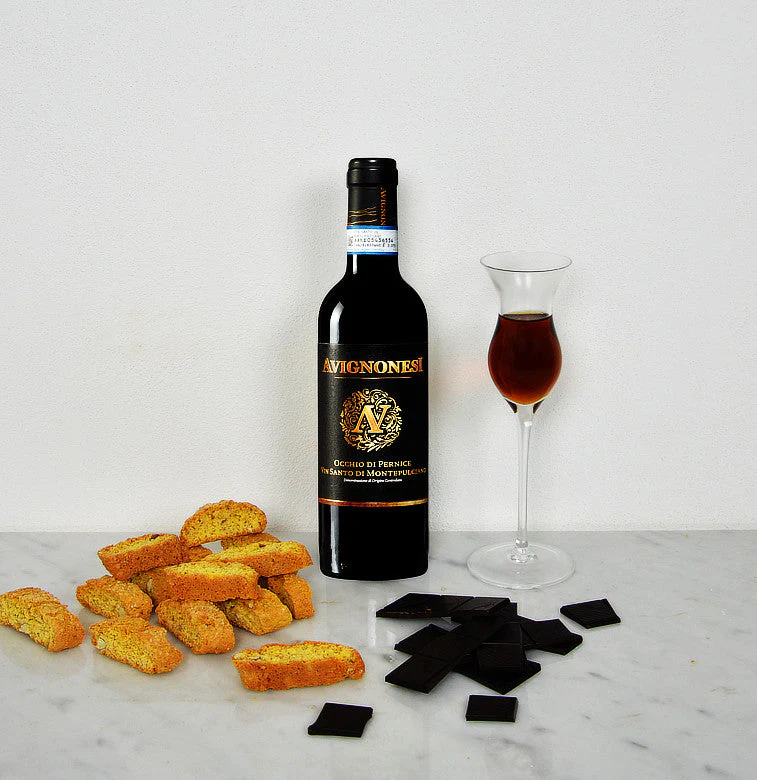
Occhio di Pernice Vin Santo di Montepulciano DOC, Tasting notes:
It reveals a complex and enveloping bouquet with aromas of prunes and dates, propolis, gingerbread, malaga and tobacco. In the mouth it is sweet and spicy and the olfactory notes return, expanding with those of dried apricots and smoked hazelnut with small nuances of Christmas spices. A wine that surprises with every sip for its concentration and depth. Retro-olfactory persistence is incredibly long. A true Fuori Serie.
Avignonesi, winery in Val di Chiana
The producer, Avignonesi extend in the Montepulciano and Cortona areas (in the Val di Chiana in the province of Arezzo) ensuring a diversified spectrum of soils that allows the production of a Vino Nobile di Montepulciano that authentically expresses the complexity of the terroir, while the Val di Chiana is suitable for the cultivation of other grape varieties such as Merlot, Chardonnay and Cabernet Sauvignon.
Occhio di Pernice a 100% sangiovese wine
This amazing Vin santo is the result of an exceptionally long aging process during which more than half of this precious liquid evaporates. It has been calculated that with the same quantity of grapes used to produce one of their 375 ml bottles, twenty-four 750 ml bottles of wine can be produced. Made from 100% Sangiovese grapes, this is the result of a strict selection of the best grapes, drying for many months on bamboo mats in the appassitoio and then 10 years in oak barrels, in contact with the mother, indigenous yeast more than 100 years old. The wine is perfect as a Meditation wine, but also with dry pastry as Cantucci Toscani or Chocolate.
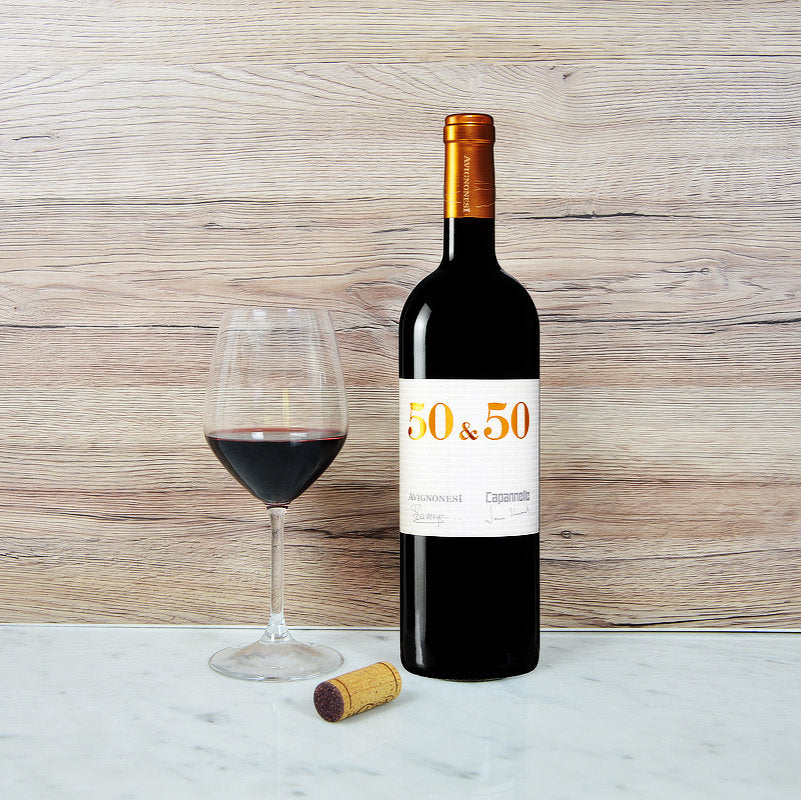
50&50 Avignonesi, Note di degustazione:
Si apre con aromi di frutta matura con bacche nere e rosse, seguiti da accenni di erbe mediterranee e spezie dolci. Al palato è ricco e persistente con un lungo finale balsamico.
Avignonesi, cantina nella Val di Chiana
Il produttore, Avignonesi si estende nelle aree di Montepulciano e Cortona (nella Val di Chiana nella provincia di Arezzo) garantendo uno spettro diversificato di suoli che consente la produzione di un Vino Nobile di Montepulciano che esprime autenticamente la complessità del terroir, mentre la Val di Chiana è adatta alla coltivazione di altre varietà di uva come Merlot, Chardonnay e Cabernet Sauvignon.
50% Montepulciano 50% Chianti:
Dall'amicizia che unisce i proprietari di Avignonesi a Montepulciano e Capannelle nel Chianti, nasce il loro ricercato vino 50&50. La prima annata del 50&50 è stata nel 1988: durante una cena conviviale, i proprietari delle due cantine iniziarono a confrontare i loro vini e ottennero questo eccezionale blend di 50% Sangiovese di Capannelle e 50% Merlot di Avignonesi. La leggenda in una bottiglia.
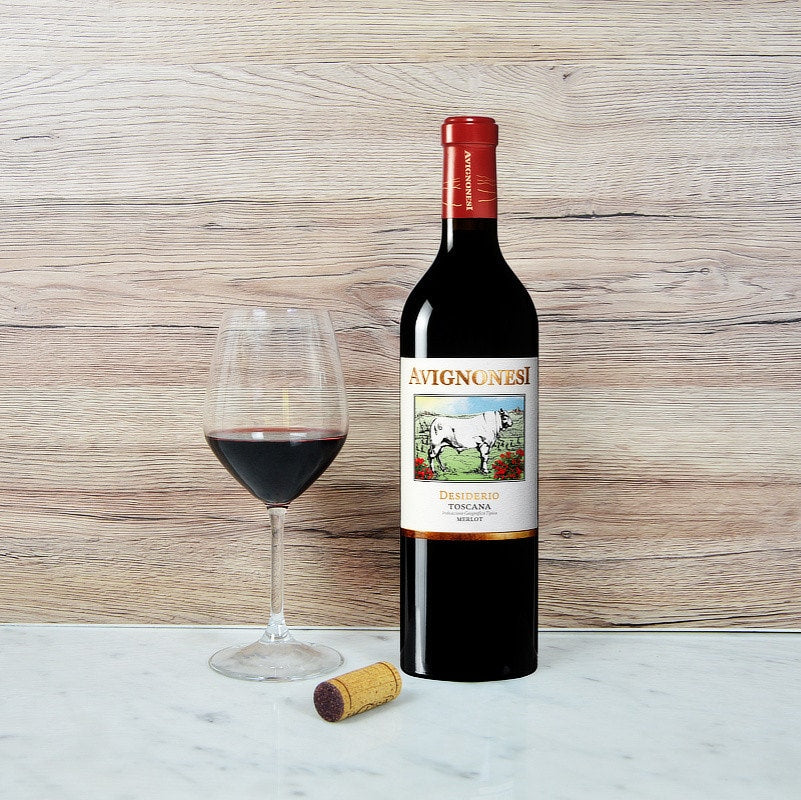
Desiderio IGT Avignonesi, Note di degustazione:
Impatto olfattivo esplosivo. Il vasto bouquet aromatico spazia dalla marmellata di ciliegie e prugne a note di tè nero, rabarbaro e grafite, con piccoli accenni finali di tabacco fermentato. Il palato è investito dalla struttura imponente e tipica del Merlot toscano, avvolgente e calda. Gustosamente in simbiosi con le note olfattive, il tannino denso e lineare accompagna le sfumature di cocco e pepe nero sul retro.
Avignonesi, cantina nella Val di Chiana
Il produttore, Avignonesi si estende nelle aree di Montepulciano e Cortona (nella Val di Chiana nella provincia di Arezzo) garantendo uno spettro diversificato di suoli che consente la produzione di un Vino Nobile di Montepulciano che esprime autenticamente la complessità del terroir, mentre la Val di Chiana è adatta alla coltivazione di altre varietà di uva come Merlot, Chardonnay e Cabernet Sauvignon.
Vino rosso Montepulciano:
Un vino Merlot al 100% perfetto da abbinare a ricette di carne di selvaggina. Desiderio era un toro che viveva nella fattoria Le Capezzine ad Avignonesi più di cento anni fa. Il toro più grande della Toscana di quel tempo, questo maestoso animale ha contribuito a definire la razza bovina Chianina, specifica della Bistecca Fiorentina. È stata una scelta naturale dedicare questo Merlot al toro amato come testimonianza dell'origine dei vini. Questo è il Merlot della Toscana al suo meglio.
