





















Best seller

581 prodotti
Ordina per:
581 prodotti
581 prodotti

Fagioli All'Uccelletto Il Vallino how to use:
Perfect for Sauce!
Label:
Beans all'uccelletto
Ingredients: water, dried cannellini beans 30%, tomato pulp 11%, extra virgin olive oil, salt, aromatic herbs, spices. May contain gluten and soy.
Average nutritional values per 100g of product:
energy 546kj-130cal, fat 3g of which saturated 0.5g, carbohydrates 15.9g of which sugars 1.6g, protein 7.2g, salt 0.7g, fibre 5.3g
After opening, store in the refrigerator between 0° and 4°C and consume within 2-3 days.
Produced in Castellina Marittima (PI)
Frandi Italia srl Piazza Barontini 26 57023 Cecina (LI)
The history of Il Vallino:
Il Vallino is an Italian organisation specialising in the distribution of excellent Tuscan food products. Their company guarantees the highest quality thanks to culture and expertise acquired over decades. Only products that respect tradition are selected within the company, pursuing the goal of excellent products.
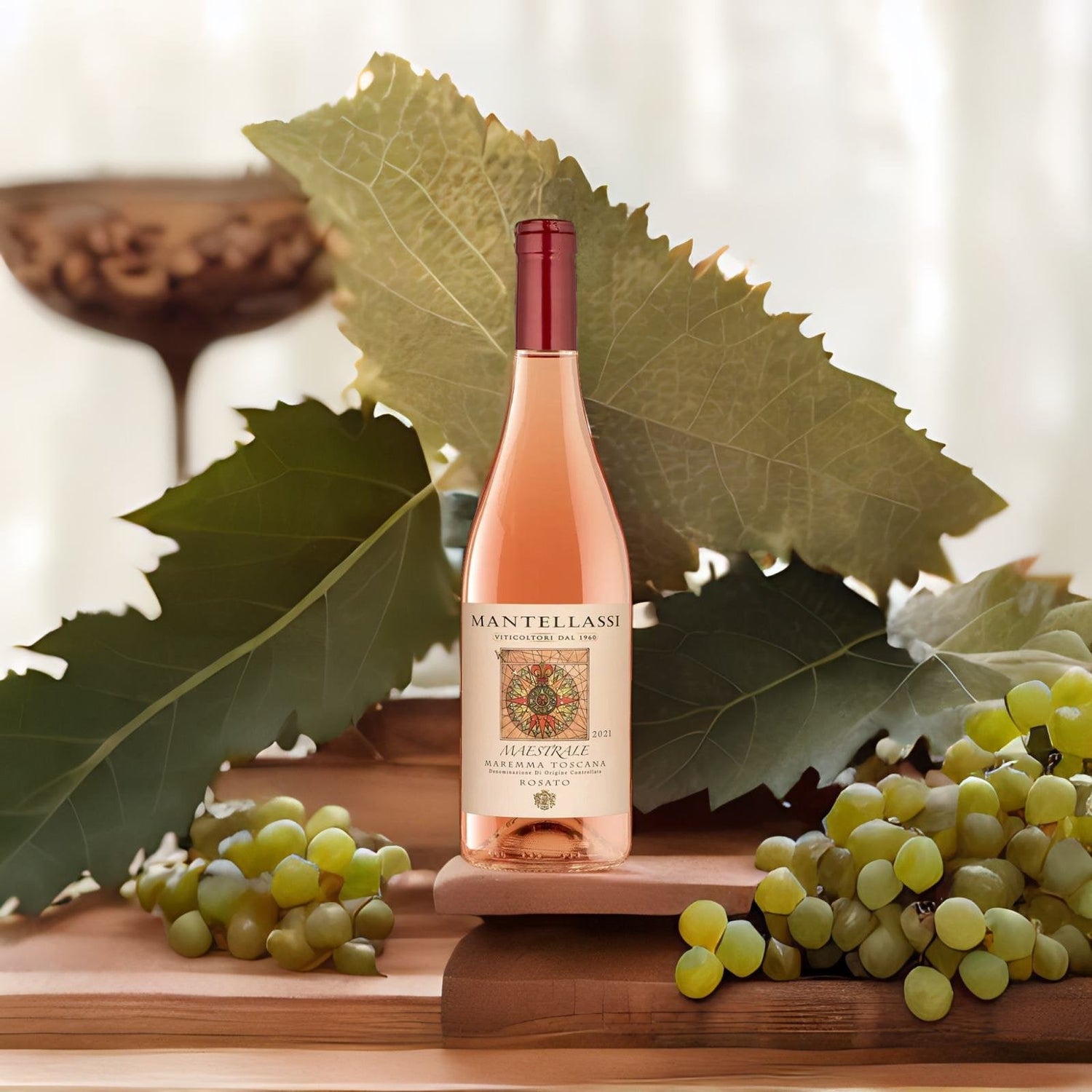
Maestrale Rosato Mantellassi, Tasting notes:
The taste is pleasant and smooth, while the olfactory examination will surprise you with its floral and fruity aromas
Maestrale Rosato Mantellassi:
Passing over Corsica and through the pine forests of the Maremma coast, the Maestrale wind arrives on the Banditaccia hills, a cool, dry wind that floods the farm with the light perfume of wine and flowers. Maestrale, as the Mantellassi brothers have named their Rosato, for its qualities of freshness and perfume.
Fattoria Mantellassi
“Labor Omnia Vincit”, as never before, this motto reconfirms its validity in the tenacity and the attachment of the Mantellassi Farm, in Magliano in Toscana. Mantellassi have always been winemakers, in 1960 began the planting of the first four hectares of vineyards in Banditaccia, up to the current one hundred. These extend on some of the many hills of the Fattoria, in terrains of tufaceous-calcareous nature with an ampelographic base consisting mainly of the Sangiovese grape, then of the Alicante, Cabernet Sauvignon, Morellino, Merlot, Canaiolo Nero, Black Malvasia, Ciliegiolo, Vermentino Bianco vines. , White Sauvignon. The Mantellassi Farm has contributed significantly to the establishment of the Morellino di Scansano Denomination of Controlled Origin in 1978 and is considered one of the most prestigious manufacturing companies.
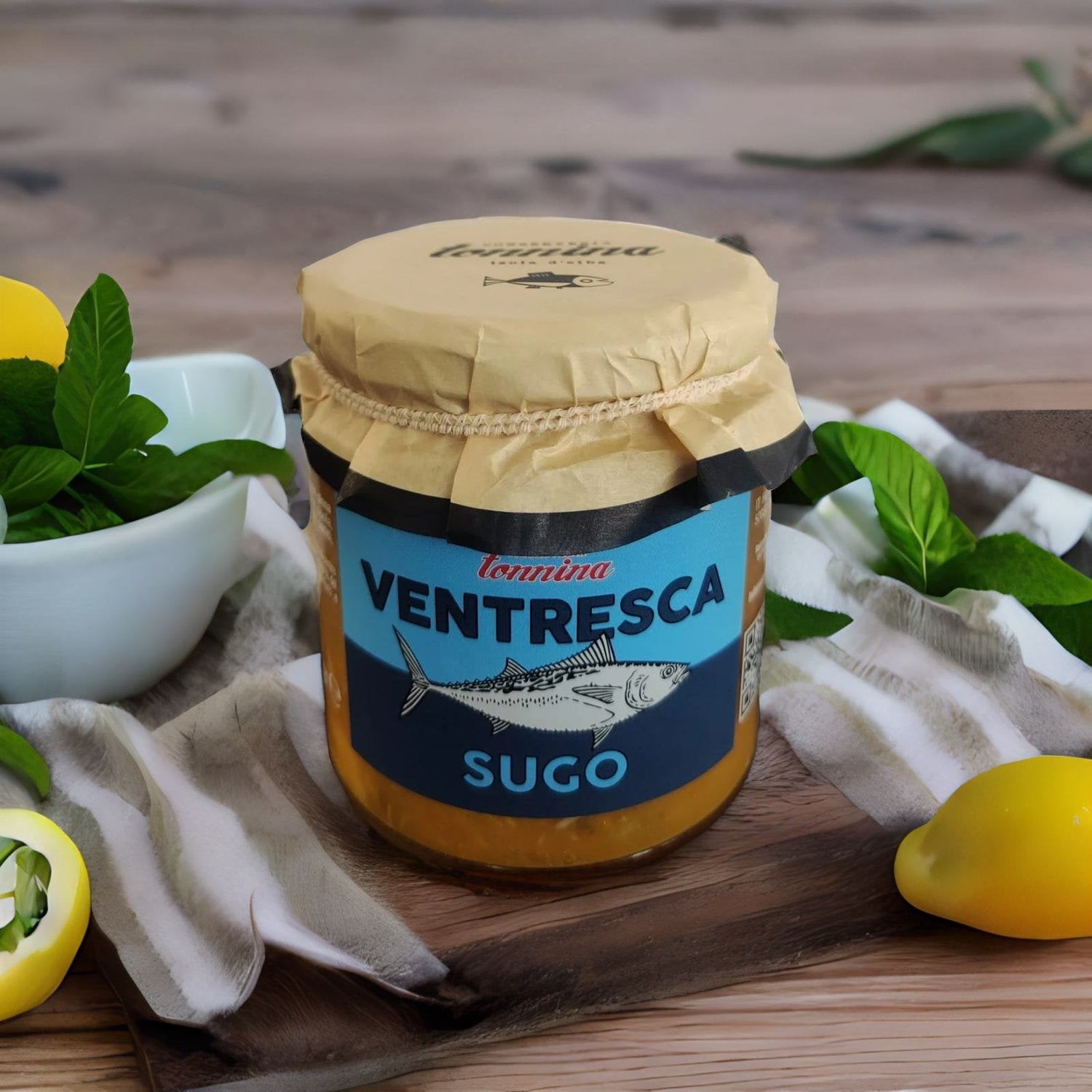
Ventresca Sauce Conserveria Tonnina
Tuna belly is the fatty part located in the ventral area of the fish, and is considered the most valuable and tasty part.
Conserveria Tonnina
The conserveria tonnina takes its name from a specific processing of a part of the tuna fish typical of the island of Elba. The shop is located near the historic cove in Portoferraio, in front of the fishermen’s boats. Here, traditional recipes with the original flavour of the ancient Elban tradition are prepared and preserved, faithfully following the methods, customs and recipes of seafaring custom. One of the values that the Conserveria Tonnina boasts is the quality of the fish products, all caught in the sea adjacent to Elba and in Italy. The products are diverse and undergo specific processing, the most commonly used fish being tuna, anchovies, skipjack and mackerel. The products are rich in omega 3 and protein, and the processing and preservation contribute to maintaining the flavour without altering it.
Label:
Tuna belly with yellow datterino tomatoes
yellow tomatoes 62%, yellowfin tuna 22% (Thunnus Albacares), olive oil, onion, capers, parsley, wine vinegar (contains sulphites), salt.
Average nutritional values per 100 grams of product:
energy 121.8 kcal, fat 8.9 g, of which saturated fatty acids 1.2 g, carbohydrates 4.7 g, total sugars 5.1 g, fibre 0.6 g, protein 6.2 g, salt 1.8 g.
Store in a cool, dry place. Once opened, keep refrigerated and consume within 3 days.
Net weight 290gr
Produced and packaged in the factory: ITH0T0DCE for Tonnina srl via Buontalenti, 4 57037 Portoferraio (LI) - Elba Island
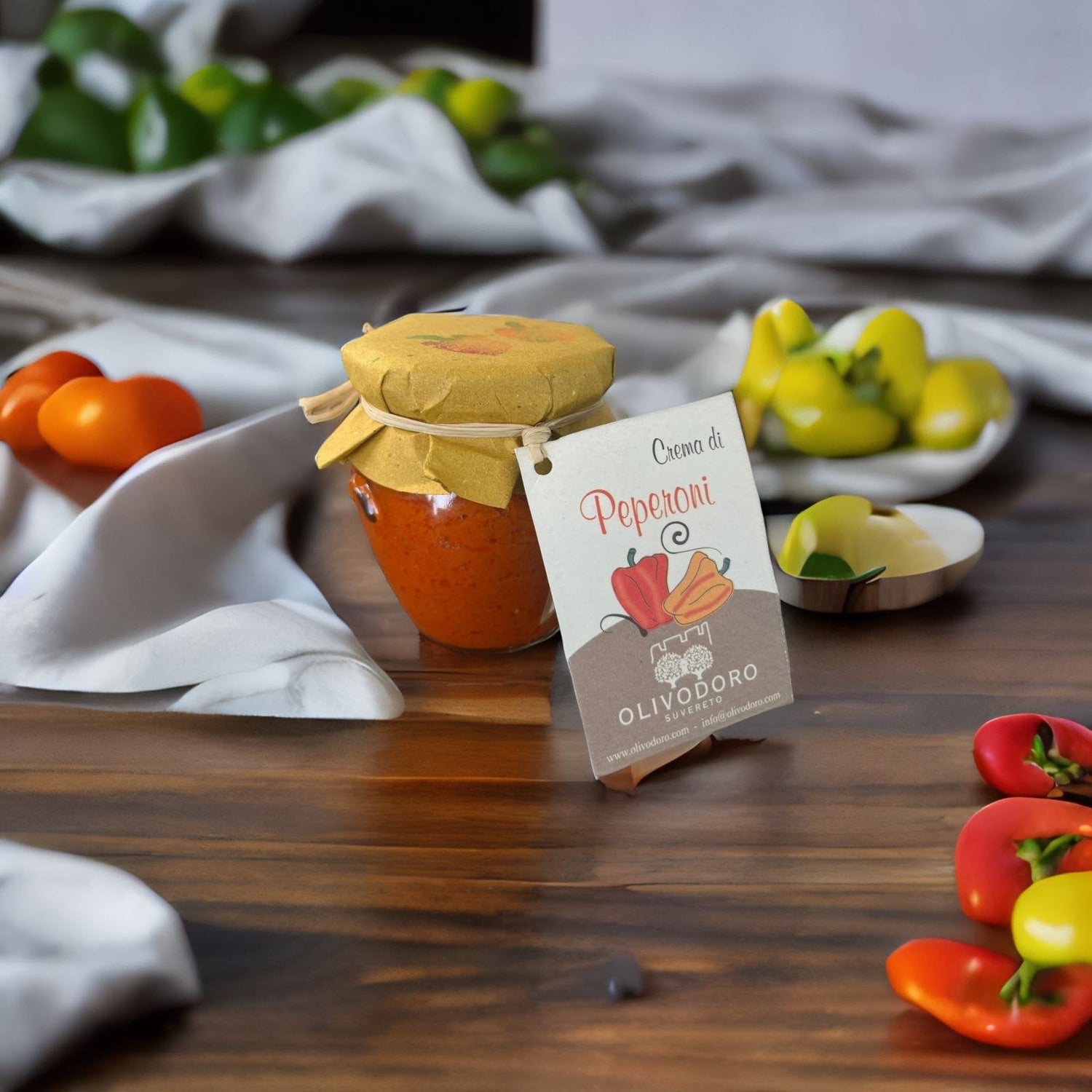
crema di peperoni Olivodoro
Realizzato con peperoni selezionati con cura, questa crema darà ai tuoi aperitivi un ottimo sapore.
Ingredienti:
Olio d'oliva
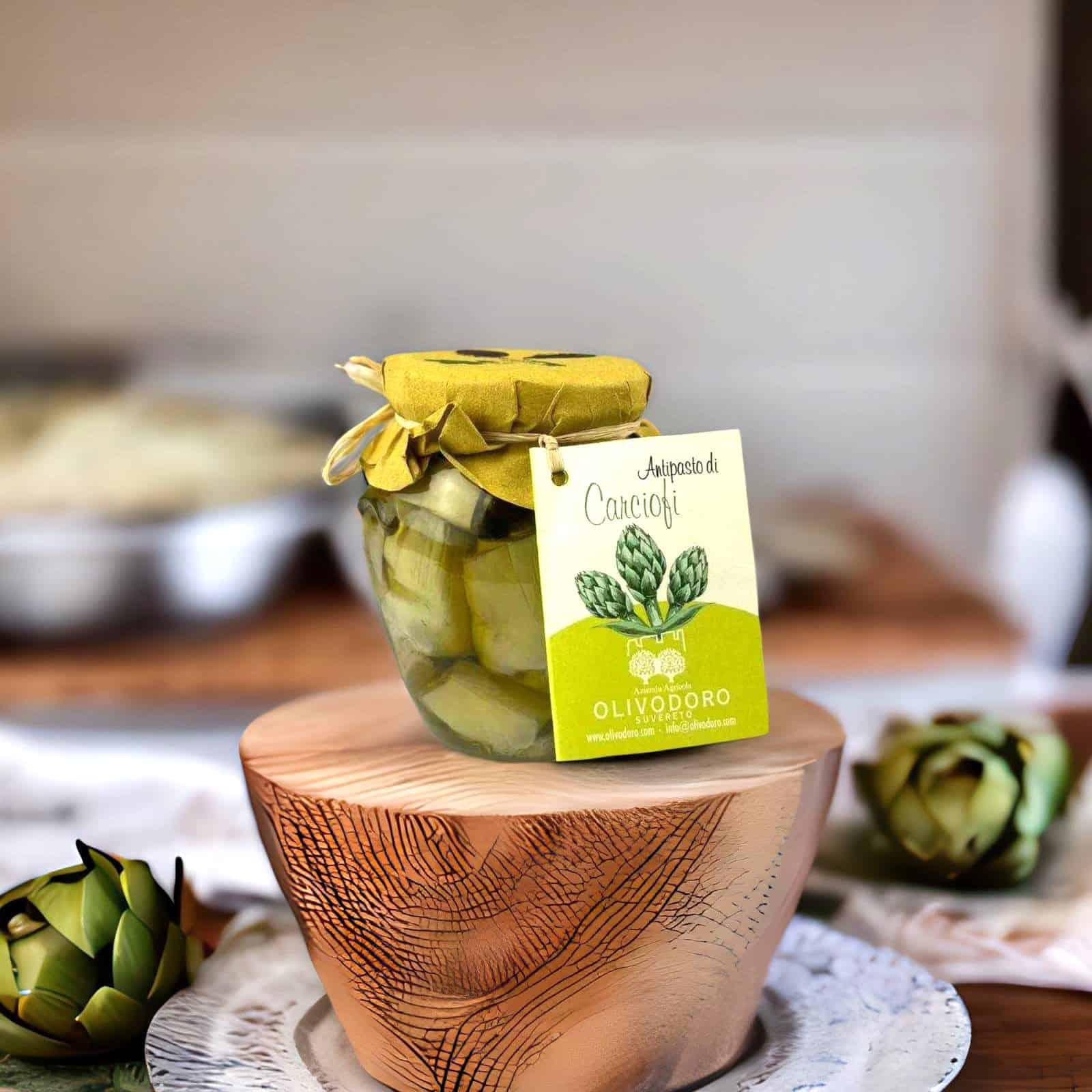
La fattoria Olivodoro è stata fondata nel 1972, a Suvereto. Seleziona e moltiplica varietà di frutta e verdura adatte per la lavorazione artigianale e la trasformazione in marmellate e confetture, elaborando la frutta appena raccolta utilizzando la tecnologia del vuoto, preservando così la frutta e la verdura dall'ossidazione e concentrando il fruttosio contenuto nella frutta stessa, preservando così la genuinità, l'integrità, il sapore e l'inconfondibile freschezza della frutta. I prodotti Olivodoro sono quindi privi di conservanti, pectina, gelatina e antiossidanti.

Marmellata di Mela e Menta Maremma Vegetale, informazioni aggiuntive:
marmellata fresca perfetta per chi ama una colazione sana, gustosa e nutriente, ideale per un buon inizio di giornata
Maremma Vegetale
Maremma Vegetale è stata fondata nel 2014 con il desiderio di riscoprire i sapori e le tradizioni culinarie del nostro territorio e con la ferma convinzione che tutti i suoi prodotti debbano essere il risultato della filiera più corta possibile, composta da materie prime coltivate quasi esclusivamente dalla stessa azienda, e che la lavorazione e lo stoccaggio debbano avvenire nel minor tempo possibile, ovvero entro 8 ore dalla raccolta.
Ingredienti:
mele 80%, zucchero bianco 17%, succo di limone, menta fresca. Può contenere tracce di sesamo, sedano, noci, pinoli. Valori nutrizionali medi per 100 grammi di prodotto: energia 114kcal-484kj, grassi 0.1g, di cui saturi 0.0g, carboidrati 27.3g, di cui zuccheri 27.3g, proteine 0.3g, fibre 1.7g, sale 0.0g
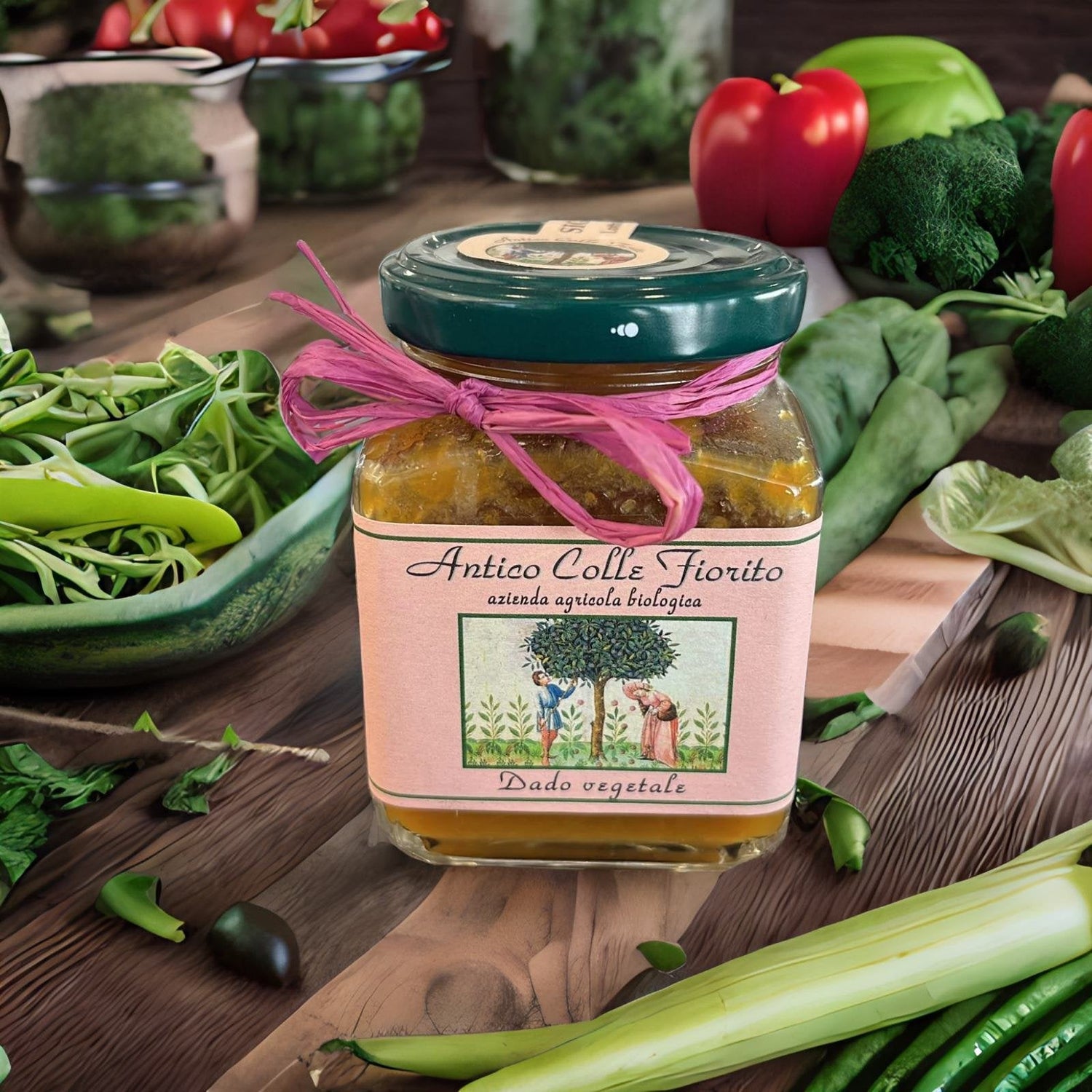
Vegetable cube:
Vegetable concentrate, great for making a fantastic broth
Label:
Vegetable stock cube
Ingredients: salt*, carrot* 18.8%, leek* 16.8%, onion* 15.5%, courgette* 12%, Swiss chard* 2%, tomato* 1%, celery*, garlic*, sage*, rosemary*. *= from organic farming.
Average nutritional values per 100 grams of product: energy 835kj/198kcal, fat 4.7g, of which saturated 0.4g, carbohydrates 29.7g, of which sugars 8.8g, fibre 3.5g, protein 3.0g, salt 48.7g
Produced and packaged on the organic farm Antico Colle Fiorito, Via Porcianese 39, 51035 Lamporecchio (PT), Tuscany, Italy
Produced in Italy
Antico colle Fiorito:
Antico Colle Fiorito has its roots in the heart of Tuscany, where their team of experts and passionate workers devote themselves with love every day to the care of their orchards and olive groves, from which they obtain products of the highest quality.
Following the most traditional Tuscan recipes, the company creates products envied by many, such as the black olive sauce made by carefully selecting the best olives through careful proce

Olivastra Seggianese Olio Abbraccio, Tasting notes:
On the palate it reveals itself with just the right amount of bitterness, a hint of chilli and a nice floral bouquet that leaves a pleasant aromatic sensation in the mouth.
Label:
Organic extra virgin olive oil
Cold-pressed oil from olives grown in Italy
Superior category oil obtained directly from olives and solely by mechanical means
Ciacci Anna Podere Vignine Via col del Rosso 27 58038 Seggiano (GR) Tuscany Italy
Nutritional information per 100ml:
energy 3403kj- 813kcal, fat 91.3g of which saturated fatty acids 14.1g, carbohydrates 0g, of which sugars 0g, protein 0g, salt 0g
Store away from light and heat sources
Olio Abbraccio
Olio Abbraccio was born in Seggiano, on the slopes of Monte Amiata, a small medieval village of about 1,000 people, but surrounded by centuries-old olive trees. Seggiano also gives its name to the cultivar, the Olivastra Seggianese, a plant that withstands the low temperatures of Monte Amiata's winters. The antioxidant properties of Abbraccio mean that this oil can be used daily both for cooking and especially for raw seasoning to benefit from all its nutritional properties.
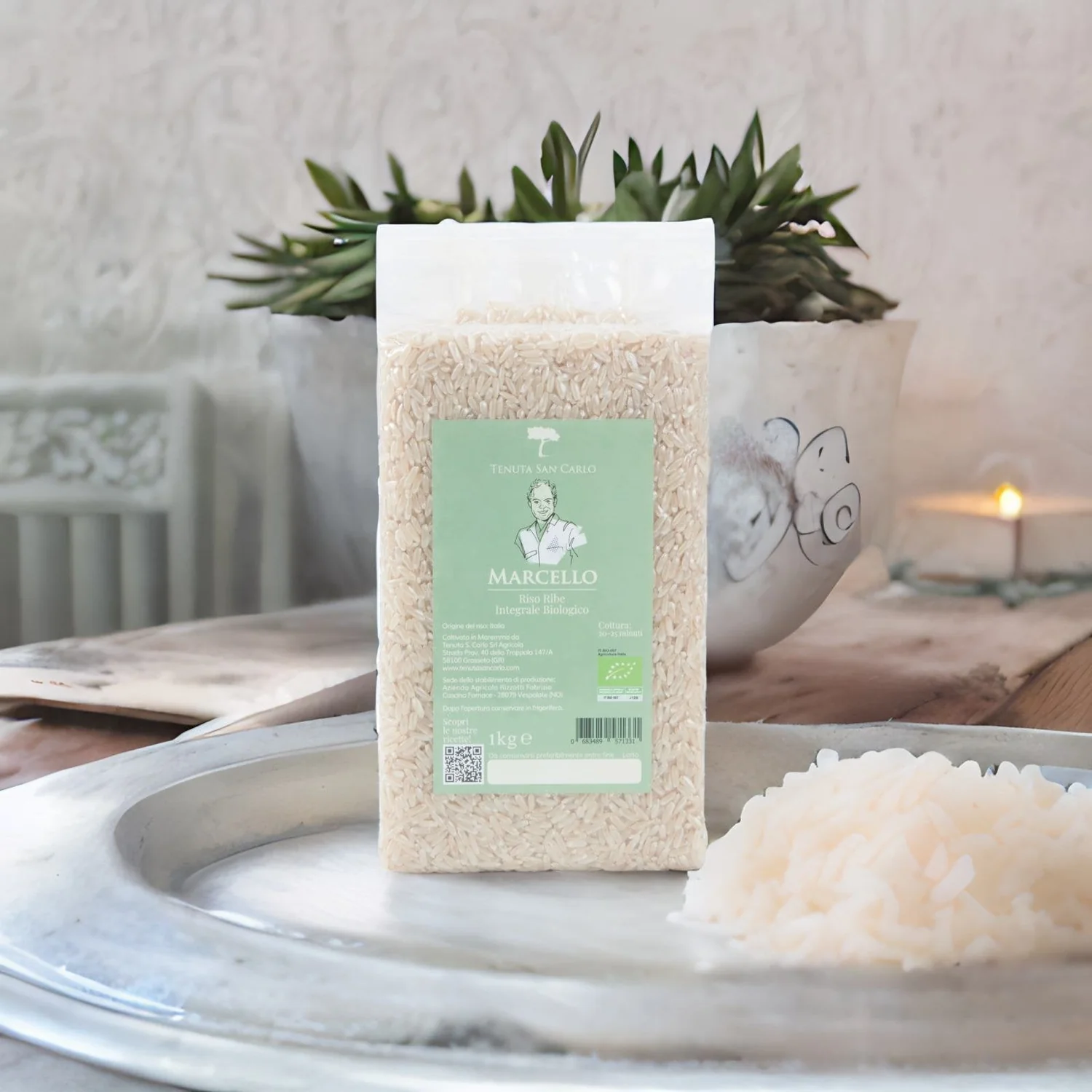
Organic Integral Ribe Rice from Maremma
Organic Integral Ribe rice. With quick and easy cooking, this is our go-to rice for a healthy meal when time is short. From an easy "rice bowl" improvised with what we find in the fridge or simply seasoned with a little oil, this rice always satisfies.
Label:
Ingredients: Organic Ribe Whole Grain Rice
Origin of rice: Italy
Organic Ribe Whole Grain Rice
Grown in Maremma by Tenuta S. Carlo SRL Agricola Strada Prov. 40 della trappola 147/A 58100 (GR)
Produced in the factory of: Cascina Fornace 28079 Vespolate (NO)
Once opened, store in the refrigerator
Cooking time 20/25 minutes
Tenuta San Carlo
When tasting their rice, you can taste the flavors of the Maremma. Tenuta San Carlo is a unique place, an out-of-the-ordinary farm. Located in the plain of the Ombrone river, inside the Maremma Park, Tenuta San Carlo is immersed in one of the most natural and unspoiled landscapes of Tuscany. To produce top-quality rice, they listen to the land and respect nature, without wanting to dominate it. From the preparation of the soil, to the selection of the seed up to the timing of the harvest, they follow an ethics of sustainability and pay close attention to details in every phase of the process. “From our land to your table” is the slogan of Tenuta San Carlo, speaking of its rice. All rice is naturally grown and worked in stone to ensure maximum quality. In October 2015, Tenuta San Carlo embarked on the multi-year transition path to certified organic production. In fact, very strict ecological standards are followed in the production of rice and no herbicides, pesticides or fungicides are used. Instead, they prefer to start preparing the soil several months before sowing to naturally avoid the growth of weeds and other potential unexpected events that would hinder a healthy harvest. To improve the quality and fertility of the soil, they use techniques such as plant cover and crop rotation. Only two types of rice are produced: Carnaroli Rice and Ribe.
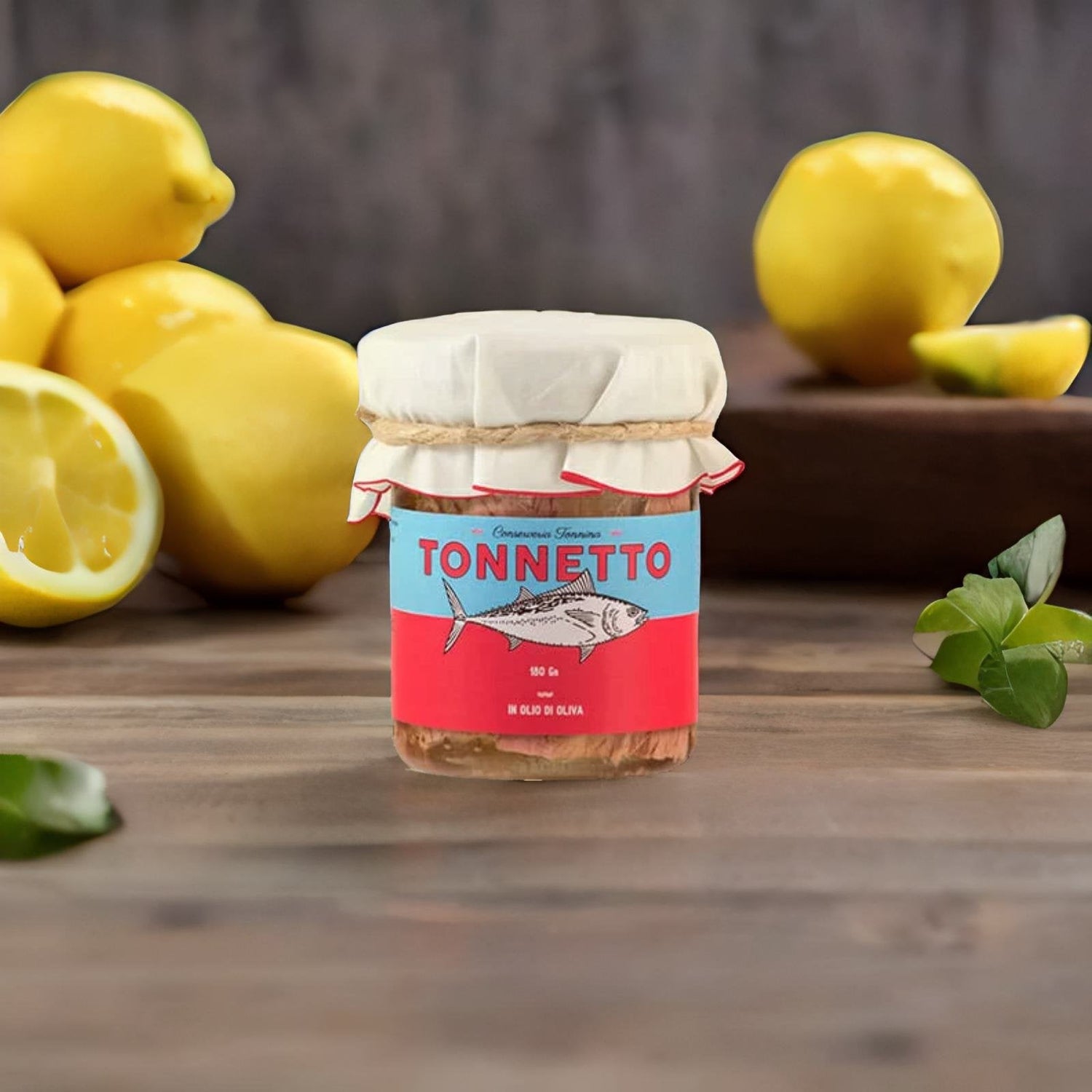
Tonnetto in oil Conserveria Tonnina
An intense taste that represents the authentic flavour of fish from the Tuscan coast, decisive and dark red in colour, processed and steamed to guarantee the preservation of the organoleptic characteristics
Conserveria Tonnina
The conserveria tonnina takes its name from a specific processing of a part of the tuna fish typical of the island of Elba. The shop is located near the historic cove in Portoferraio, in front of the fishermen’s boats. Here, traditional recipes with the original flavour of the ancient Elban tradition are prepared and preserved, faithfully following the methods, customs and recipes of seafaring custom. One of the values that the Conserveria Tonnina boasts is the quality of the fish products, all caught in the sea adjacent to Elba and in Italy. The products are diverse and undergo specific processing, the most commonly used fish being tuna, anchovies, skipjack and mackerel. The products are rich in omega 3 and protein, and the processing and preservation contribute to maintaining the flavour without altering it.
Label:
Tuna in Olive Oil
Ingredients: Alletterato tuna (Euthynnus Alletteratus) 72%, olive oil 27%, salt.
FAO zone: 37 Caught with purse seine nets - PS Average nutritional values per 100g of product:
Energy value (Kcal) 374.22
Energy value (kJ) 1547.81
Fat (g) 34.10
of which saturated (g) 3.96
Calories from fat (kcal) 306.90
Carbohydrates (g) 0.80
Total sugars (g) 0.00
Dietary fibre (g) 0.00
Protein (g) 16.02
Salt (g) 0.32
Store in a cool, dry place. Once opened, store in the refrigerator and consume within 3 days.
Net weight 180 g - Drained weight 130 g
Produced and packaged in the factory: ITH0T0DCE for Tonnina srl via Buontalenti, 4 57037 Portoferraio (LI) - Elba Island
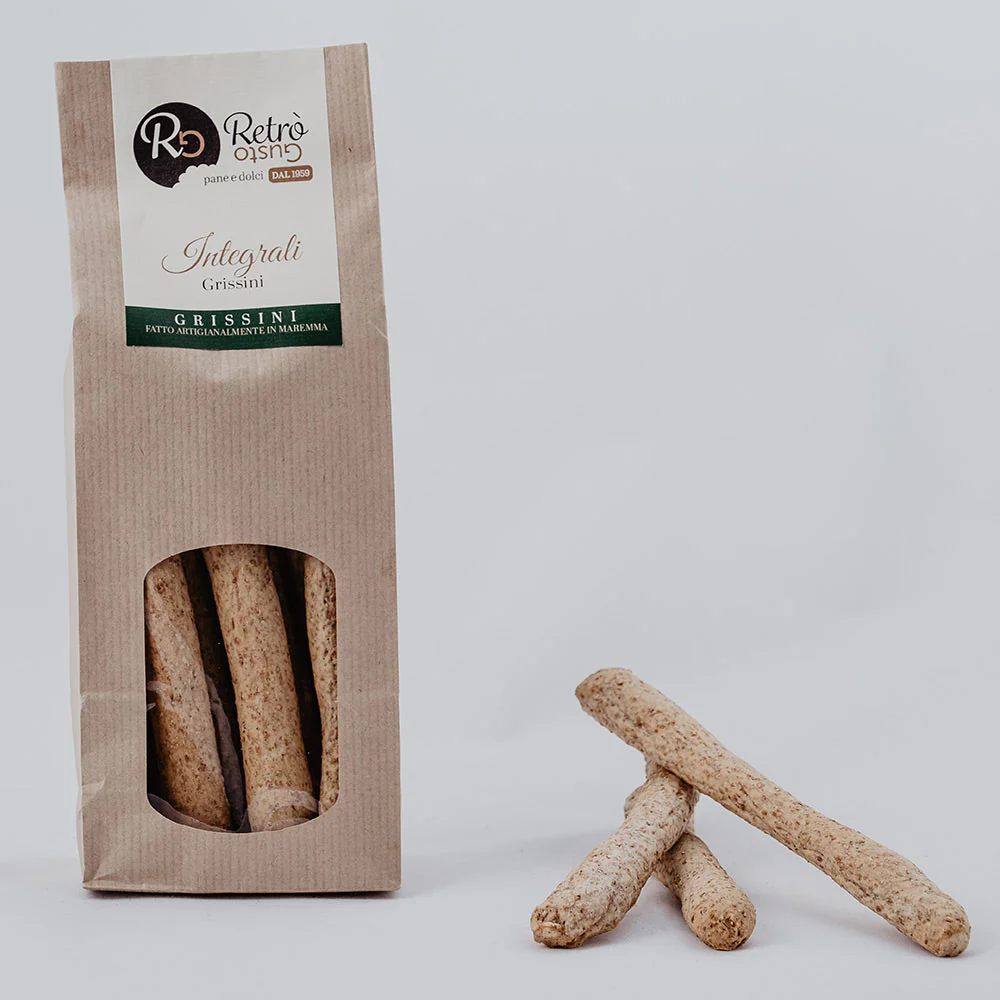
Wholemeal breadsticks Retrogusto
Rich in fibre thanks to the use of wholemeal flours, these breadsticks are perfect to accompany your aperitifs in a healthy way but without sacrificing taste
Label:
INGREDIENTS:whole wheat flour, water, vegetable fat, extra virgin olive oil, brewer's yeast, salt. ALLERGENS:contains flour, may contain traces of eggs, milk, nuts and/or peanuts
Nutritional information per 100g of product:
energy 936kj- 224kcal, fat 5.5g of which saturated 1.4g, carbohydrates 39g of which sugars 1.2g, protein 6.9g, fibre 4,9g, salt 0.76g
Store in a cool, dry place
Produced and packaged by RG s.r.l.s. via Pisa 30/A 58100 Grosseto
Retrogusto
Founded in 1959, RetròGusto is a young company with roots firmly planted in the traditions of the Tuscan territory. In 1968, RetròGusto moved to Grosseto and began its journey to become what is now one of Tuscany’s best confectionery companies, all products are handmade according to ancient recipes handed down over time and this guarantees that each product is unique and inimitable, the family, passion and dedication are the company’s strengths, transmitting generation after generation their immense passion guaranteeing the company a future of growth even while remaining faithful to tradition, and it is also thanks to the perfect intertwining of tradition and modernity that their products are among the best in Tuscany.

Pane del Pescatore Retrogusto
Farina, zucchero e frutta secca nel biscotto tradizionale che ha rivoluzionato lo spuntino dei pescatori toscani.
Ingredienti:
INGREDIENTI: farina di grano ‘0’, zucchero, uova, margarina, amido, agente lievitante E450, sale, sultane, pinoli, mandorle, noci, aromi. ALLERGENI: contiene farina, uova, mandorle, può contenere tracce di latte, noci e/o arachidi.
Retrogusto
Fondata nel 1959, RetròGusto è un'azienda giovane con radici saldamente piantate nelle tradizioni del territorio toscano. Nel 1968, RetròGusto si è trasferita a Grosseto e ha iniziato il suo percorso per diventare quella che oggi è una delle migliori aziende di confetteria della Toscana; tutti i prodotti sono realizzati a mano secondo antiche ricette tramandate nel tempo e questo garantisce che ogni prodotto sia unico e inimitabile. La famiglia, la passione e la dedizione sono i punti di forza dell'azienda, trasmettendo di generazione in generazione la loro immensa passione, garantendo all'azienda un futuro di crescita anche rimanendo fedele alla tradizione. Ed è proprio grazie al perfetto intreccio di tradizione e modernità che i loro prodotti sono tra i migliori della Toscana.
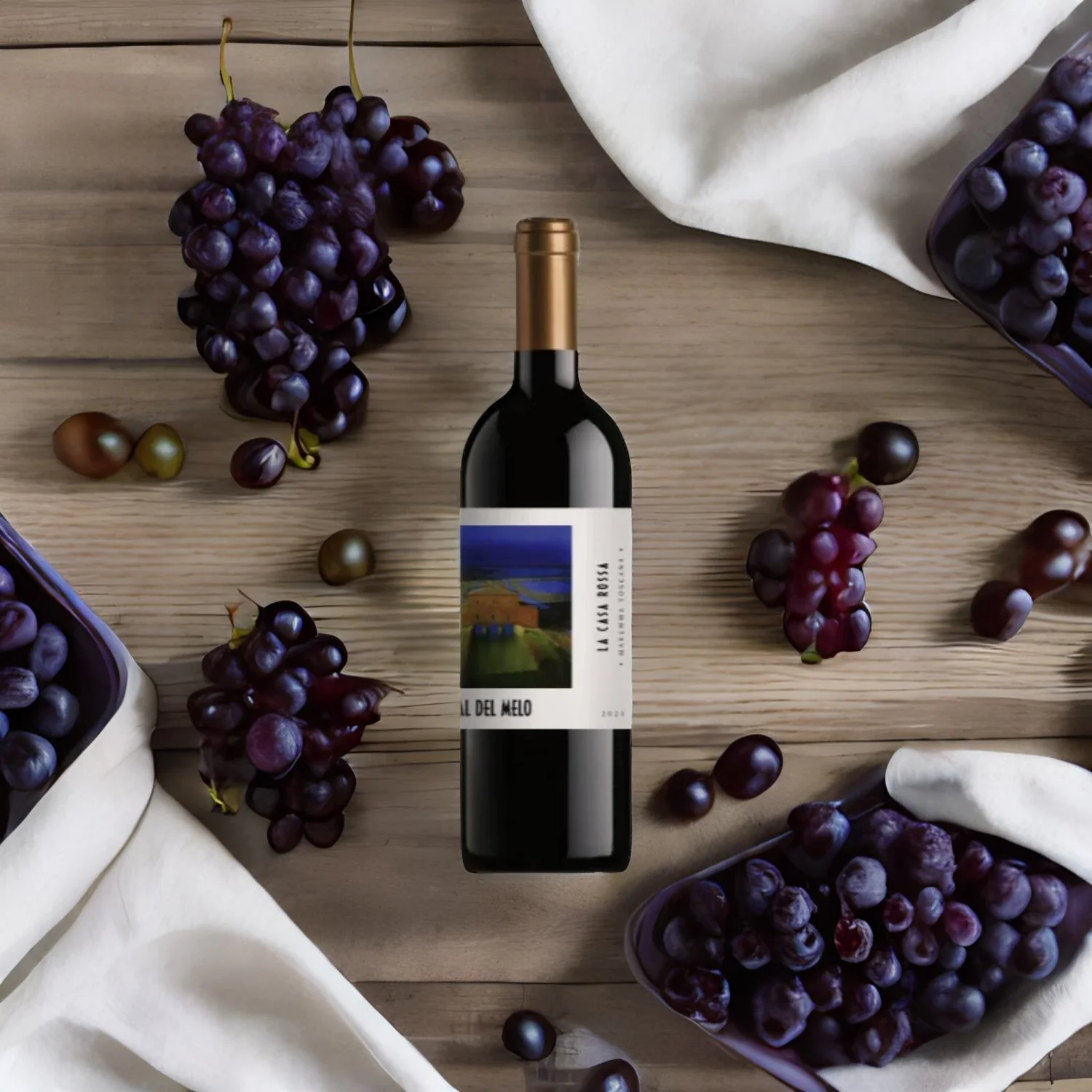
La Casa Rossa Val Del Melo, Tasting notes:
Intense ruby red colour, a Sangiovese of character and elegance. Bouquet of red fruit notes in perfect harmony with light hints of vanilla and tobacco. The taste is fine and complex, with elegant tannins giving a fresh and balanced flavour
On arrival at the winery, the grapes are destemmed and left almost intact. Alcoholic fermentation takes place in steel tanks at a temperature of 27 °C and maceration lasts about 25 to 30 days, followed by malolactic fermentation. It matures in 10hl French oak barrels for about 24 months, after which the wine is blended and bottled.
Val Del Melo
The Val Del Melo winery is located near the town of Castiglione della Pescaia, its proximity to the sea combined with its location at the bottom of the valley means that Pian di Rocca is characterised by a particularly temperate microclimate, 2-3 degrees higher than the local average. It is no coincidence that for years the area was the production site for the first fruits and vegetables of the Maremma. Since 2019, the company has been using certified organic farming, which guarantees genuine products of excellent quality
Label:
MAREMMA TOSCANA
CONTROLLED DESIGNATION OF ORIGIN
RED
BOTTLED AT THE ORIGIN BY GR/3779/IT ON BEHALF OF PIAN DI ROCCA S.R.L. LOC, VAL DEL MELO CASTIGLIONE DELLA PESCAIA - ITALY
PRODUCED IN ITALY - PRODUCT OF ITALY
750 ml and
15% vol
CONTAINS SULPHITES
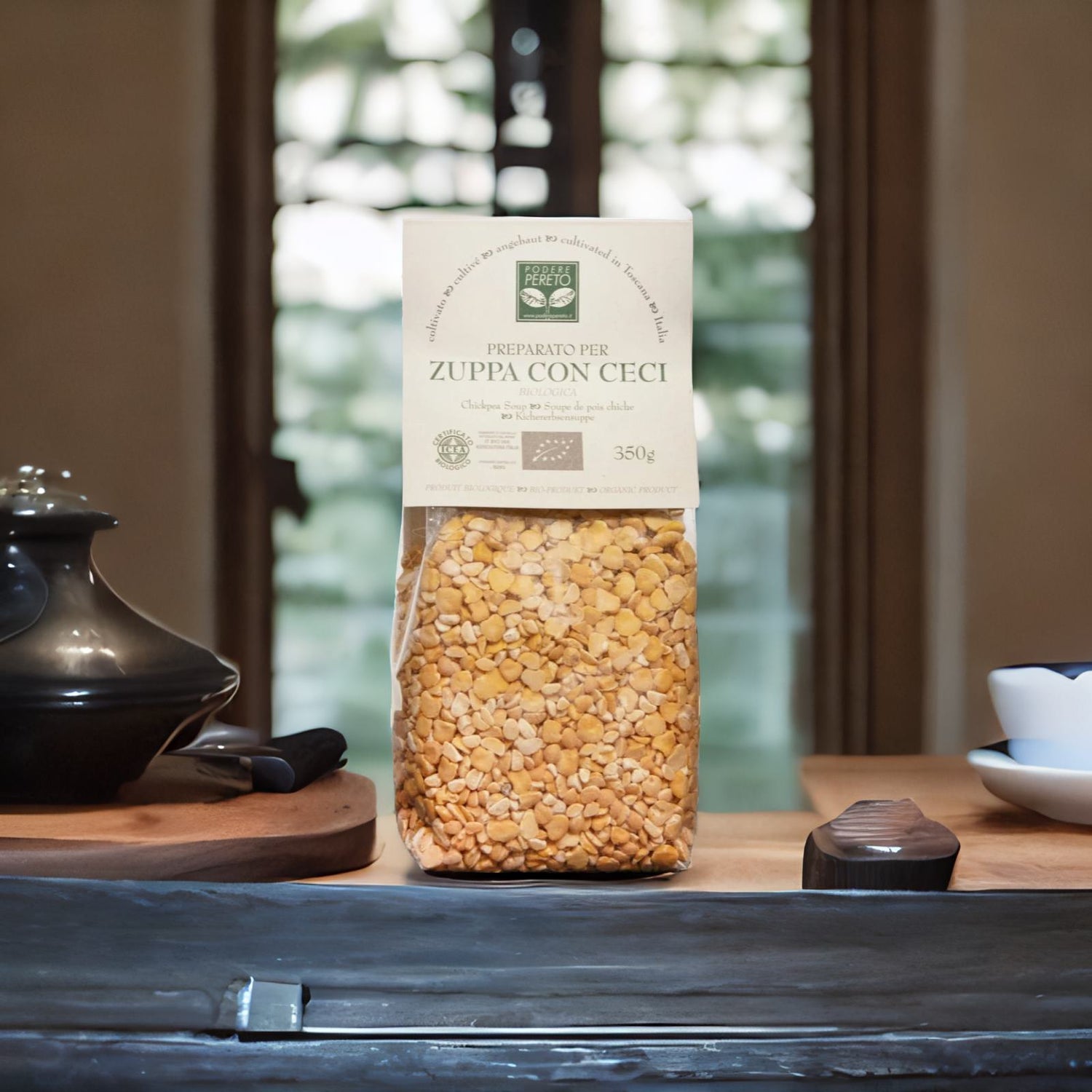
Soup with organic chickpeas Podere Pereto, How to use:
This soup can be cooked without soaking, or after a quick soak and cook in about 40 minutes. We recommend cooking the soup with 1 chopped potato; after cooking you can puree everything with a blender and season the resulting cream with extra virgin olive oil, heated separately, and 3/4 sprig of fresh rosemary.
Label:
Ingredients:
Hulled chickpeas* 50%, hulled chickpeas* 50% *from organic farming
May contain traces of mustard, gluten
Average nutritional values per 100 g: Energy 1468 kJ / 350 kcal, Fat: 5.5 g - of which saturated fatty acids: 0.6 g, Carbohydrates: 57 g - of which sugars: 7.2 g, Protein: 21 g, Salt: 0.04 g
Prepared for oat soup This soup can be cooked without soaking
Produced and packaged in a protective atmosphere by: Azienda Agricola Podere Pereto Località podere Pereto Rapolano terme (SI)
Store in a cool, dry place
Podere Pereto:
The company was founded in 1991, in Serre di Rapolano, in the heart of Tuscany.
The aim is to practise organic farming, creating a microcosm that is sustainable both ecologically and economically and socially. From the very beginning, in fact, local and ancient varieties are cultivated, excluding the use of fertilisers, chemical and synthetic pesticides, toscanello bean and zolfino bean, and cereals such as Verna, Gentil Rosso, Frassineto and Cappelli durum wheat, are naturally adapted to the local soil and climate, Furthermore, it allows the farm to adopt a three-year rotation system and prevent over-exploitation of the land, thus ensuring respect for the balance of the land

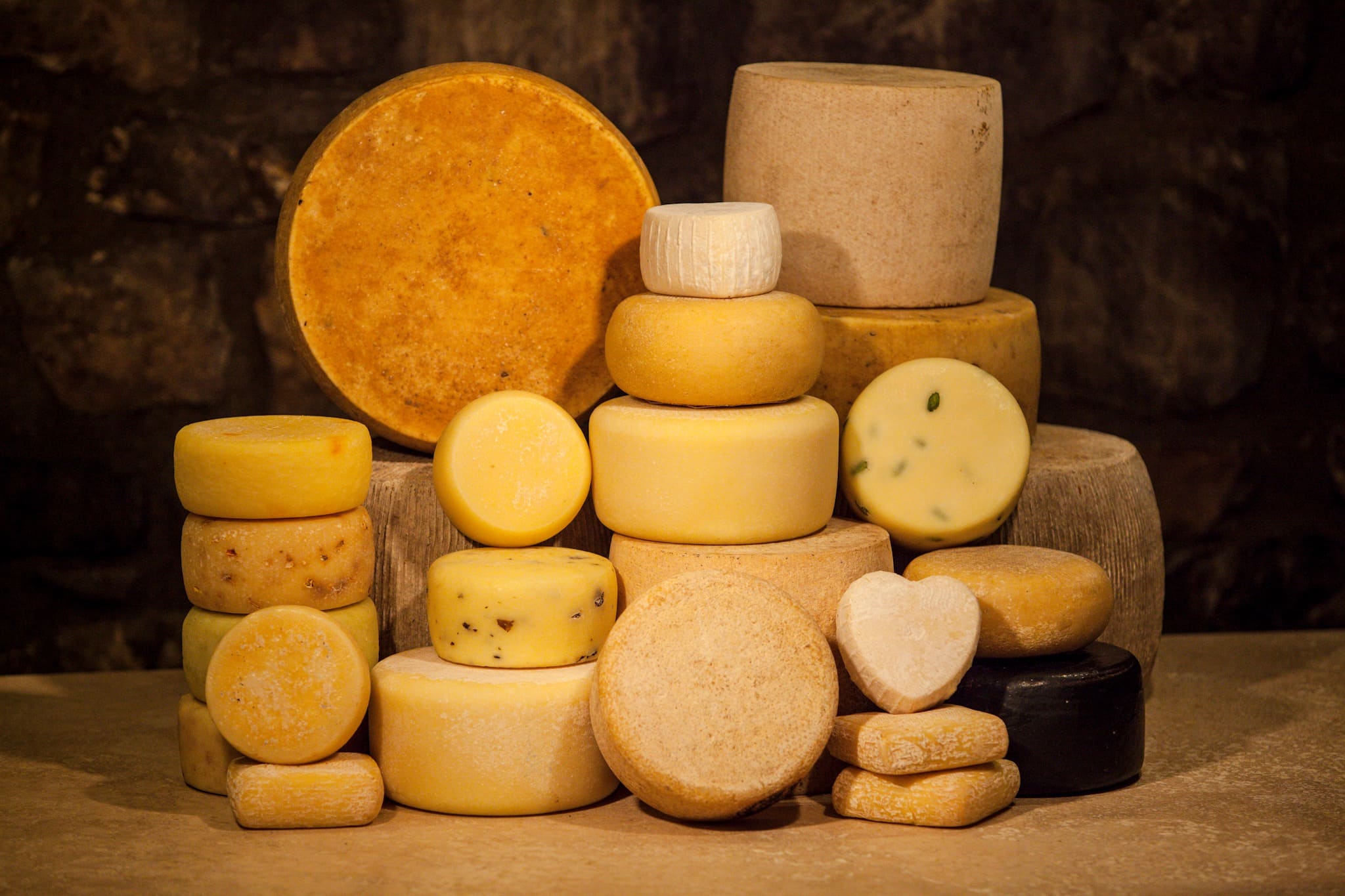
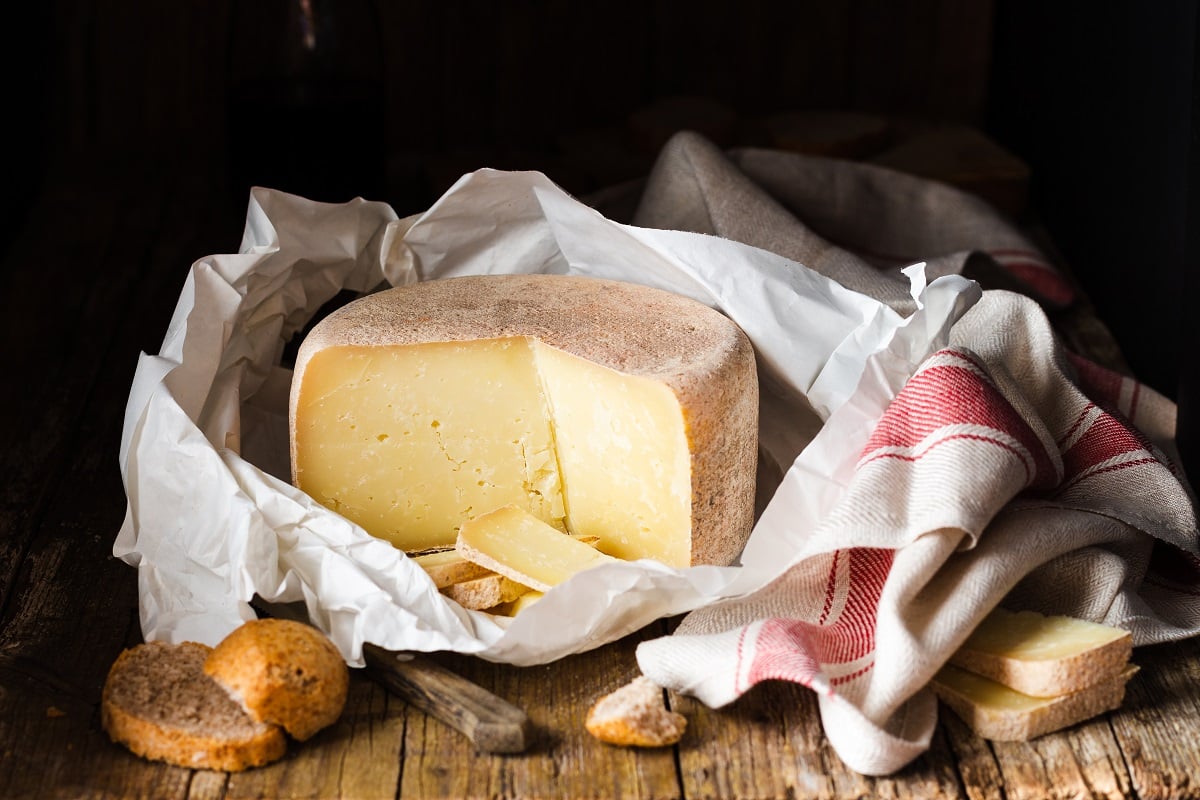
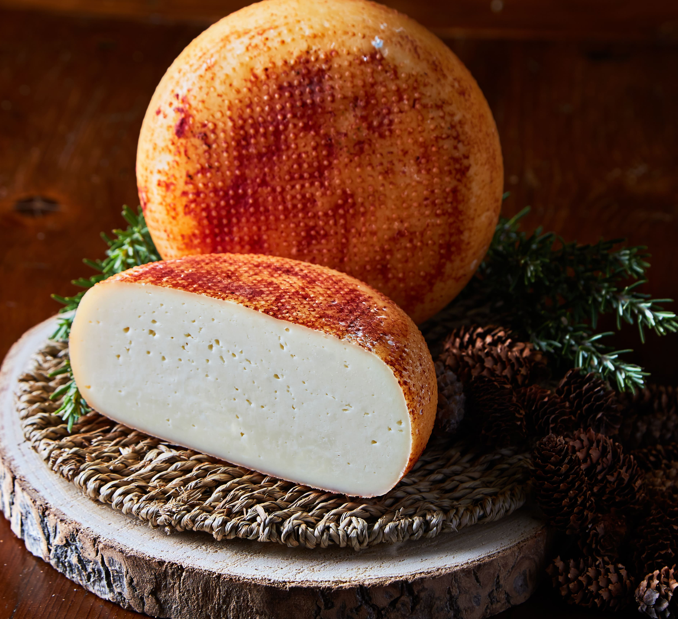
Pecorino Toscano DOP Caseificio Il Fiorino, Tasting notes:
Intense with clean herbaceous hints. Exceptional taste, with well-balanced savouriness and sweetness, long and persistent aftertaste
Caseificio Il Fiorino
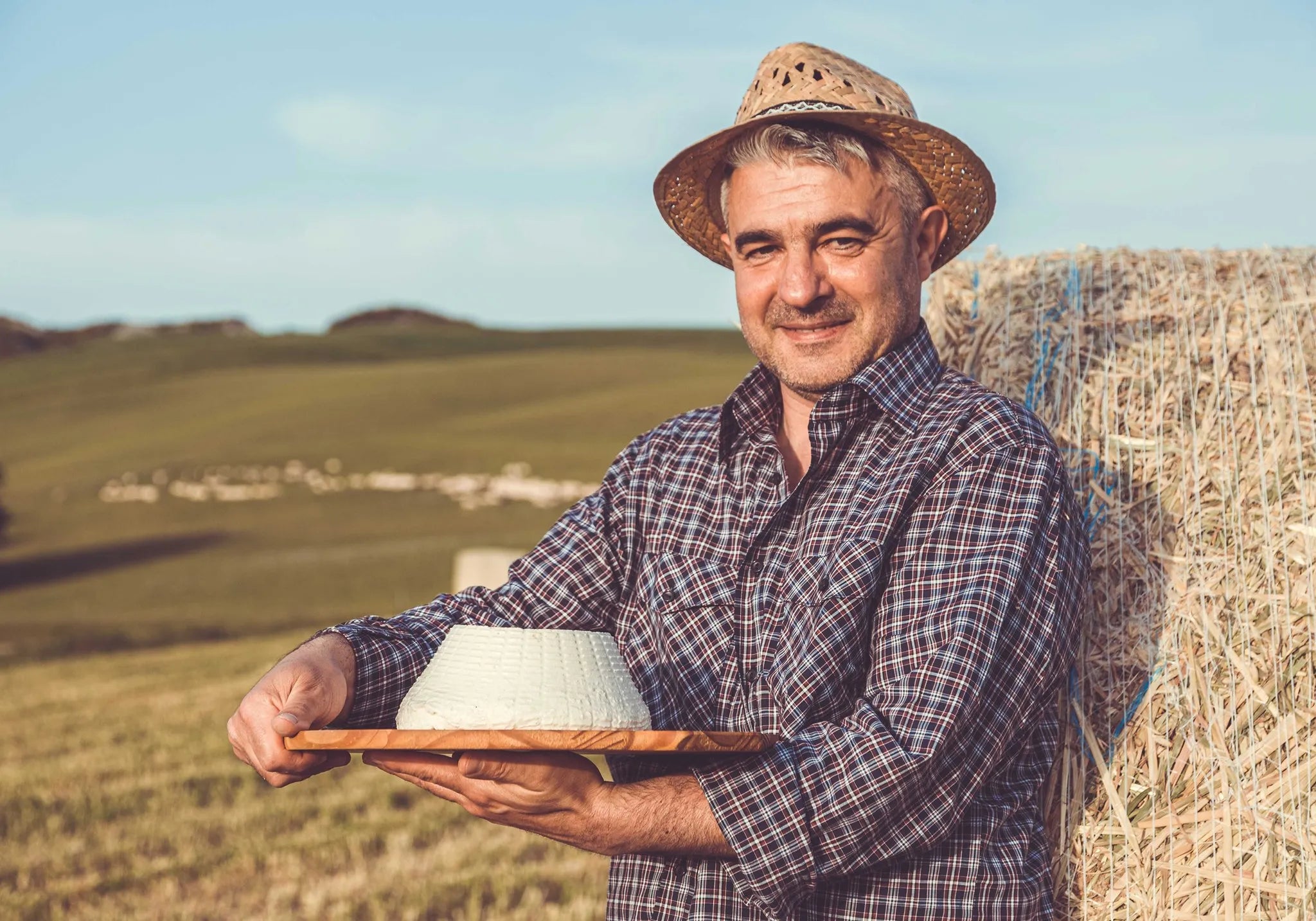
The Caseificio Fiorino dairy is located in a place of extraordinary charm and historical value, the medieval village of Roccalbegna on the slopes of Mount Amiata. The milk used to produce our cheeses comes exclusively from selected local farms in the neighboring municipalities: Roccalbegna, Saturnia, Semproniano, Scansano, Arcidosso, Cinigiano, Campagnatico, and Grosseto. After internal analysis, a selection is made based on the characteristics of the milk and the type of cheese to be made. The aim is to achieve the highest quality regardless of yield. Each processing step is carried out by hand by experienced cheesemakers. In fact, their Pecorino Toscano cheeses are awarded every year in the most important global competitions.
Label:
pasteurised sheep’s milk, Volterra salt, rennet, milk enzymes indigenous lactic ferments, average nutritional values per 100 grams of product: ENERGY 1706 kJ / 411 kcal, FATS 33 g, Of which saturated fatty acids 22 g, CARBOHYDRATES < 0,5 g, Of which sugars < 0,5 g, PROTEINS 28 g, SALT 1.3 g, CALCIUM (as Ca) 876 mg, IRON (as Fe) < 1, VITAMIN A 0.20 mg, PHOSPHORUS (as P) 580 mg, MOISTURE 28 %, CHOLESTEROL 118 mg FAT IN DRY MATTER 46 %
Produced by Caseificio Il Fiorino Srl, Loc. Paiolaio, Roccalbegna, Italy
Store in the refrigerator between 4°C and 8°C.

Orto Fortunato:
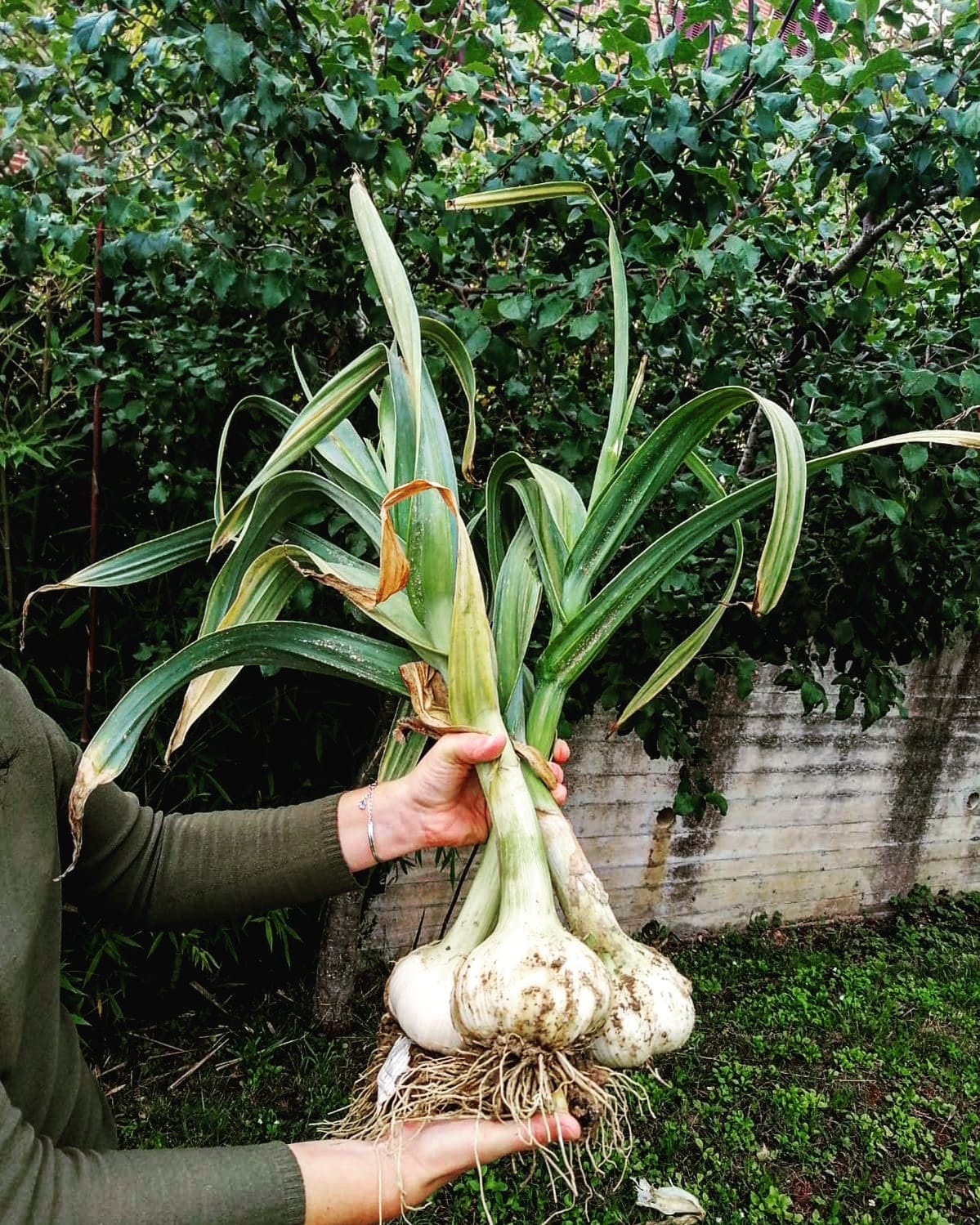
In Valdichiana, the tradition of Aglione has continued for centuries, reaching the present day and remaining present in traditional cuisine in many recipes.
Since Etruscan times, this particular species of garlic has marked the culinary tradition of inland Tuscany.
Remaining in the hearts of traditional families in Valdichiana and Val D'Orcia, it has managed to survive to the present day. Orto Fortunato has revived it and made it the focus of its production in order to help everyone rediscover its unique and inimitable flavour, educating them about the beneficial and purifying properties of the species.
Label:
Packaging:
Glass jar 11.5 cm x Ø 7.5 cm, net weight 320 g.
Ingredients:
Yellow tomatoes (90%), Valdichiana garlic (6%), basil, extra virgin olive oil, salt, chilli pepper.
Nutritional values per 100 g:
Energy 205 kJ / 49 kcal, Fat 0.5 g of which saturated fat 0 g, Carbohydrates 7.6 g of which sugars 5.9 g, Fibre 1.7 g, Protein 1.8 g, Salt 1.10 g.
Characteristics:
Ready to use. Once opened, store in the refrigerator and consume within 3 days.
How to Use:
Perfect for dressing any type of pasta, especially traditional pici, with the addition of mushrooms or sausage or capers and anchovies or clams/mussels or rigatino.
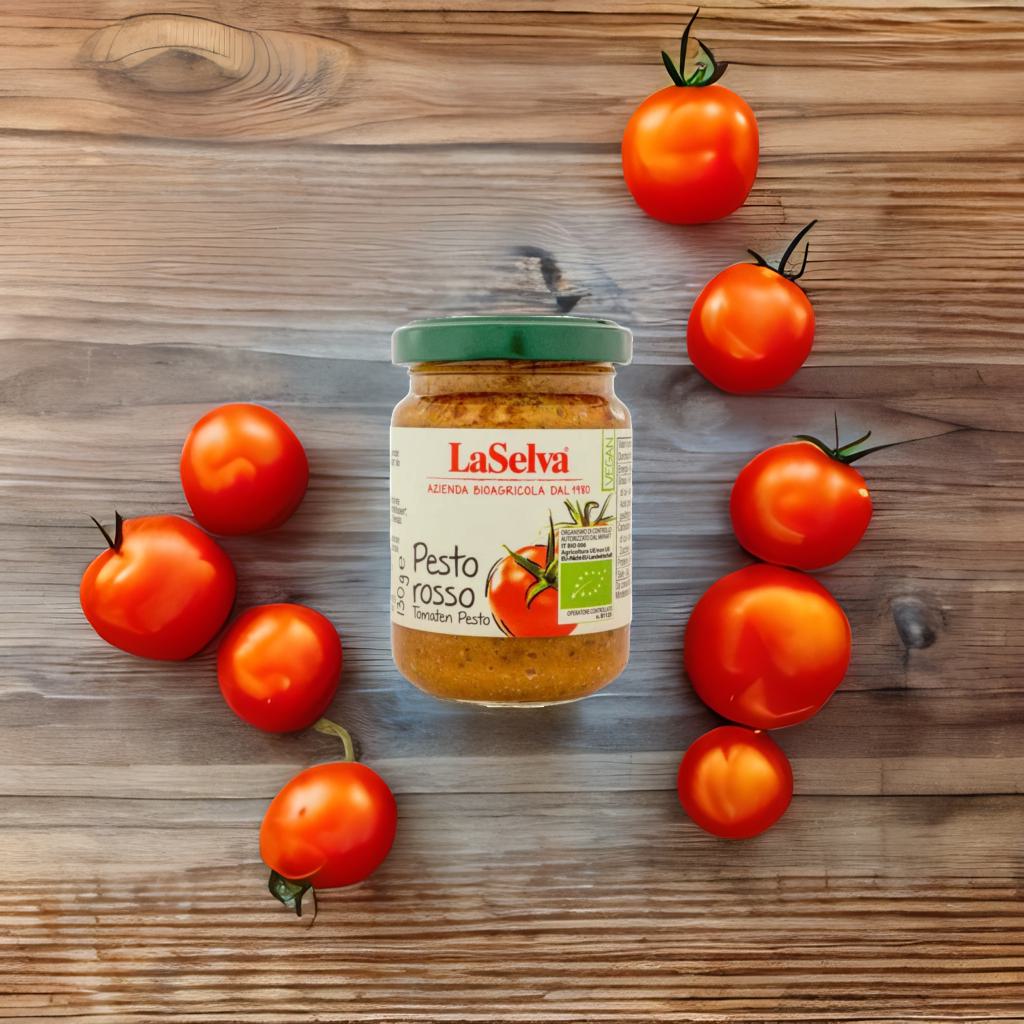
Tasting Notes:
A rich pesto made with sun-dried tomatoes, enhanced with cashews and flavoured with basil and extra virgin olive oil. A jar of Pesto Rosso contains only organic products, grown, harvested and processed with the utmost respect for nature.
La Selva Organic Farm:
LaSelva entered the world of Italian organic farming in 1980 in southern Tuscany, in Albinia – Orbetello (GR), a place that is still the heart of all its activities today. Today, on over 600 hectares of agricultural land and in compliance with all European Union regulations on organic farming, it grows vegetables, fruit, cereals and grapes for wine production. It also produces its own animal feed, from which it also obtains the fertiliser that nourishes the soil, thus creating a closed-cycle agricultural system.
Label:
Allergens: Cashews
Contents 130 g
Once opened, store in the refrigerator and consume within a few days.
Origin of raw materials Tuscany - Italy
Uses
Our Red Pesto is a tasty alternative to classic pasta sauces. Try it on toasted bread croutons and in your soups.
Ingredients: tomatoes* 49%, sunflower oil*, rehydrated dried tomatoes* (dried tomatoes*, water, sea salt) 11.8%, CASHEWS* 5.3%, basil* 4.7%, potato flakes*, extra virgin olive oil*, pine nuts*, garlic*, sea salt. May contain shell fragments.
Average values per 100 g of drained product
Energy value kcal 264kcal-1093kJ
Protein 3.1g
Carbohydrates 10g
Of which sugars 2.9g
Fat 23g
Of which saturated acids 2.1g
Fibre 3.9g
Salt 1.3g

Tasting Notes:
Rocket pesto has a strong, slightly spicy flavour, with the characteristic bitter notes of rocket. Creamy, aromatic, fresh and green, it enhances pasta dishes, crostini and salads.
La Selva Organic Farm:
LaSelva entered the world of Italian organic farming in 1980 in southern Tuscany, in Albinia – Orbetello (GR), a place that is still the heart of all its activities today. Today, on over 600 hectares of agricultural land and in compliance with all European Union regulations on organic farming, it grows vegetables, fruit, cereals and grapes for wine production. It also produces its own animal feed, from which it also obtains the fertiliser that nourishes the soil, thus creating a closed-cycle agricultural system.
Label:
Contents 130 g
Once opened, store in the refrigerator and consume within a few days.
Origin of raw materials: Rocket grown on our own farm in the Tuscan Maremma
Ingredients: rocket* 56%, sunflower oil*, potato flakes*, sea salt, extra virgin olive oil*, pine nuts*, lemon juice*. *from organic farming. May contain shell fragments.
Average values per 100 g of drained product
Energy value kcal 364.0kcal-1499.0kJ
Protein 2.5g
Carbohydrates 6.0g
Of which sugars 2.2g
Fat 36.0g
Of which saturated acids 4.0g
Fibre 2.8g
Salt 2.1g


🌿 Box of Tuscan Vegetables — 100% Authentic, 100% Healthy, 100% Italian
What's inside:
- 1x Pitted Mixed Olives in Brine, vacuum-sealed – 500g
- 1x Artichoke Hearts, cooked naturally, vacuum-sealed – 250g
- 1x Cabbage in Wine Vinegar, vacuum-sealed – 500g
- 1x Sun-Dried Tomatoes, vacuum-sealed – 250g
- 1x Nocellara Olives in Brine, vacuum-sealed – 500g
- 1x Caper Berries, cooked naturally, vacuum-sealed – 250g
- 1x Sweet and Sour Giardiniera, vacuum-sealed – 500g
- 1x Spicy Sweet and Sour Giardiniera, vacuum-sealed – 500g
- 1x Pitted Leccino Olives in Brine, vacuum-sealed – 500g
this is the content of the 3,25kg box and of the one-time purchase.
The 6,5 box has 2x what's inside the 3,25kg box.
🌿 Real Tuscan Vegetables, the Way Nature Intended
Our Box of Tuscan Vegetables brings the authentic taste of the Tuscan countryside straight to your table — clean, honest, and genuinely healthy. Every vegetable is grown on trusted local farms, harvested at peak ripeness, and prepared using traditional methods that respect the ingredient rather than mask it.
🥗 Clean Ingredients, No Compromises
This is what "healthy" should actually mean: no preservatives, no coloring, no thickeners — ever. Every product in this line is either cooked or prepared at low temperature and then vacuum-sealed, a method that locks in freshness and flavor naturally, without shortcuts.
- Olives are preserved simply in brine (water and salt), vacuum-sealed for freshness
- Vegetables are preserved naturally, in vinegar, or sweet-and-sour, always vacuum-sealed
- Artichokes and select vegetables are prepared au naturel, with nothing added
The result is produce that tastes like it just came from the garden — because that authenticity is the whole point.
🧺 Practical Freshness, Real Convenience
- Shelf-stable at room temperature — no need for refrigeration until opened
- Vacuum-sealed for a shelf life of 12 months
- Once opened, simply consume within a few days for the best flavor
- No intermediaries: packed and shipped directly from the farms that grow it
🥗 Choose the Size and Rhythm That Fits Your Life
- 3.25 kg Box – ideal for singles, couples, or small households
- 6.5 kg Box – perfect for larger families or passionate home cooks
Available as a one-time purchase or a subscription, delivered every 15 days or once a month — so genuinely healthy, authentic Italian ingredients are always within reach.
🚜 From Tuscan Farms to Your Kitchen
Our farmers harvest each vegetable at its perfect moment and prepare your box the same day it ships. No middlemen, no long storage, no compromise — just real Tuscan produce, full of natural flavor.
🌞 Why Choose This Box?
- 100% Italian, 100% Tuscan, 100% authentic
- No preservatives, coloring, or thickeners — ever
- Cooked or prepared at low temperature, vacuum-sealed for freshness
- Shelf-stable for 12 months, no refrigeration needed until opened
- Flexible subscription: every 15 days or monthly
- Available in 2 formats to match your household
Bring the true flavors of Tuscany home — clean, simple, and made the way nature intended.
🚚 Shipping & Delivery
Every Box of Tuscan Vegetables is shipped directly from our partner farms, carefully packed to arrive as fresh as the day it left the field.

Tasting Notes:
This unique wine combines the solar energy of Sangiovese with the refined finesse of Pinot Noir. The blend reveals an unexpected balance: the depth of Tuscany tempered by the delicacy of Burgundy. The colour is bright ruby, slightly translucent. The nose opens with notes of black cherry, ripe strawberry, with subtle hints of undergrowth, blond tobacco and sweet spices. On the palate, the attack is soft, supported by a pleasant acidity. The tannic texture is fine, taut and precise. A wine of character and elegance, to be served slightly chilled.
La Corneta:
Rooted in Tuscany, in the heart of the prestigious Chianti Colli Aretini terroir, La Corneta bears the mark of time and the seasons. The wines are produced from 8 hectares of organically cultivated vineyards, where historic grape varieties coexist with rarer ones: Sangiovese, Pinot Noir, Syrah, Chardonnay, Sauvignon Blanc and Incrocio Manzoni. This diversity, combined with living soils and controlled yields, provides health and expressive raw materials. The approach is then based on rigorous vinification and careful selection of the containers for ageing: temperature-controlled stainless steel tanks, barriques and tonneaux of different sizes and vintages, terracotta and cocciopesto amphorae are tools that are used with precision. This meticulous, contemporary and demanding method is part of a constant search for balance, structure and natural complexity, without standardising taste.
Label:
Appellation: Chianti Colli Aretini
Grape varieties: 50% Sangiovese, 50% Pinot Noir
Vinification: Barrique
Alcohol content: 13.5%
Nutritional information
Average values per 100 ml
Energy 351 kJ - 83 kcal
Fat 0 grams
- Of which saturated fatty acids 0 grams
Carbohydrates 1.4 grams
- Of which sugars 0 grams
Protein 0 grams
Salt 0 grams
Location Corneta, SNC, 52019, Laterina Pergine Valdarno (AR)

Tasting Notes:
Made mainly from Sangiovese grapes, this rosé is produced by direct pressing and vinified
and aged entirely in amphorae to preserve the purest expression of the grapes. The colour is pale, with peach-coloured reflections. The nose reveals delicate aromas of redcurrant, white melon, orange peel and dried flowers. On the palate, the texture is soft, almost velvety, supported by a delicate freshness and a fine tannic structure. The amphora gives a crystalline texture and a slightly salty finish, without any heaviness. A rosé with character, dry and precise, designed more for the table than for an aperitif.
La Corneta:
Rooted in Tuscany, in the heart of the prestigious Chianti Colli Aretini terroir, La Corneta bears the mark of time and the seasons. The wines are produced from 8 hectares of organically cultivated vineyards, where historic grape varieties coexist with rarer ones: Sangiovese, Pinot Noir, Syrah, Chardonnay, Sauvignon Blanc and Incrocio Manzoni. This diversity, combined with living soils and controlled yields, provides health and expressive raw materials. The approach is then based on rigorous vinification and careful selection of the containers for ageing: temperature-controlled stainless steel tanks, barriques and tonneaux of different sizes and vintages, terracotta and cocciopesto amphorae are tools that are used with precision. This meticulous, contemporary and demanding method is part of a constant search for balance, structure and natural complexity, without standardising taste.
Label:
Appellation: Chianti Colli Aretini
Grape varieties: 90% Sangiovese, 10% Syrah
Vinification: Amphora
Alcohol content: 13%
Nutritional information
Average values per 100 ml
Energy 312 kJ - 74 kcal
Fat 0 grams
- Of which saturated fatty acids 0 grams
Carbohydrates 1.1 grams
- Of which sugars 0 grams
Protein 0 grams
Salt 0 grams
Location Corneta, SNC, 52019, Laterina Pergine Valdarno (AR)

Grifi IGT Avignonesi, Note di degustazione:
Il vino rivela note di mirtilli, more, incenso, erbe e sandalo. Con accenni di marmellata di more e cannella. Il palato si sviluppa come un'esplosione balsamica sostenuta da una forte acidità. I tannini vivaci su tutto il palato accompagnano il finale saporito e persistente.
Avignonesi, cantina nella Val di Chiana
Il produttore, Avignonesi si estende nelle aree di Montepulciano e Cortona (nella Val di Chiana nella provincia di Arezzo) garantendo uno spettro diversificato di suoli che consente la produzione di un Vino Nobile di Montepulciano che esprime autenticamente la complessità del terroir, mentre la Val di Chiana è adatta alla coltivazione di altre varietà di uva come Merlot, Chardonnay e Cabernet Sauvignon.
Vino rosso Montepulciano:
Un'incredibile miscela in cui la freschezza del Sangiovese (50%) si fonde perfettamente con la struttura del Cabernet Sauvignon (50%). Un altro eccellente esempio di un grande blend per l'invecchiamento.
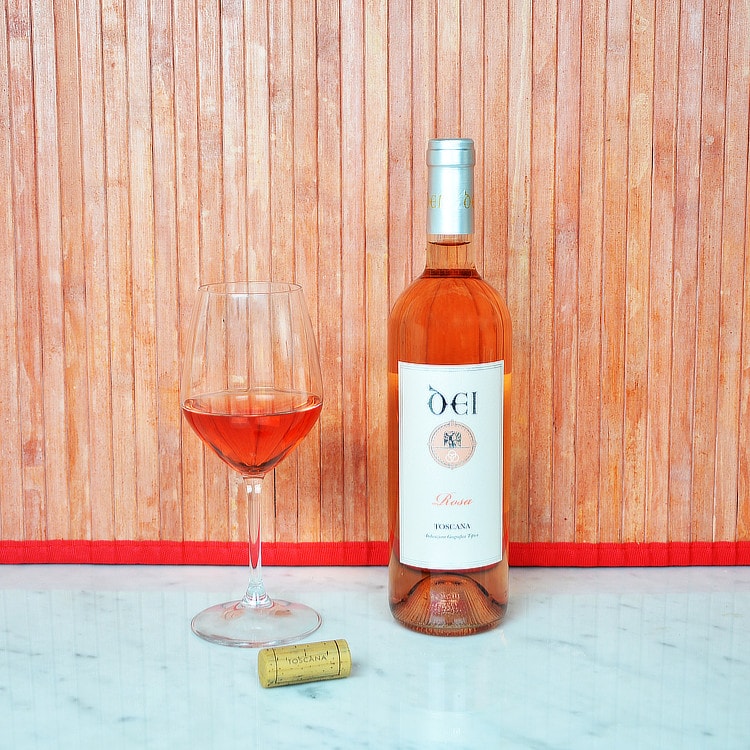
Rosa Cantine Dei, Tasting notes:
Is characterised by a soft pink colour, its aroma is rich in fresh aromas, especially flowers and fruit, red and soft. Moderate acidity, fresh fruit aromas such as cherry, strawberry, raspberry and orange blossom.
the Rosa Cantine Dei IGT comes from the “Martiena” vineyard, which is located in front of the winery and whose grapes are therefore the first to reach the reception area during the harvest. The grapes destined for Rosa are harvested a couple of weeks earlier than those for Rosso di Montepulciano: when the veraison is complete and the acidity level is still high with good sugar content. The soil, rich in sand and tuff, enhances the wine’s fruity taste, its pleasantness and freshness. After a soft pressing, the must is placed in a refrigerated tank at 6-8°C for 24-36 hours. Fermentation takes place in stainless steel at a controlled temperature of 14°C for 7-10 days.
Cantine Dei
Cantine Dei is known as one of the best wine producers of Montepulciano. Every year their wines are awarded and recognized by critics as excellent.
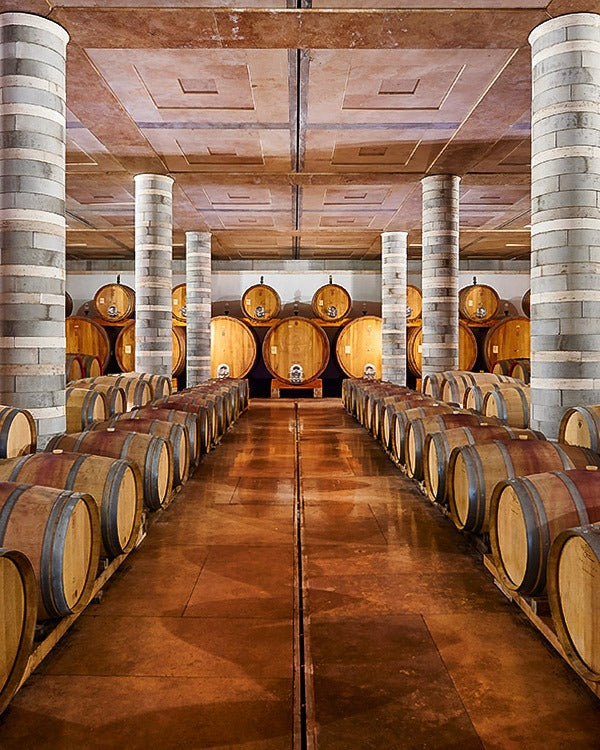
At the Dei estate, arts merges with wine. Their cellar is the perfect example of how architecture and winemaking are working together for a stunning result.
Their wine are all based on the local Sangiovese production and their Nobile wine are among the best of the region.
Label:
Cantine Dei
Rosa
TUSCANY
ORGANIC WINE
Typical Geographical Indication Bottled at source by Maria Caterina Dei Montepulciano. Italy
PRODUCED IN ITALY
750 ml
13.5% Vol
contains sulphites

Villa Di Capezzana, Tasting notes:
Elegant, with notes of black cherry and raspberry well blended with the ripe fruit. In the mouth it is soft, enveloping, with soft tannins and good body. The acidity is present, but well balanced by the tannic richness. Long finish, with a sweet liquorice aftertaste.
A very small and perhaps little-known DOC, but with wines of great quality. On the outskirts of Florence, wine has always been produced at Tenuta Capezzana.
Label:
CAPEZZANA
CONTE CONTINI BONACOSSI
Carmignano
CONTROLLED AND GUARANTEED DESIGNATION OF ORIGIN
BOTTLED AT THE ORIGIN BY THE WINE GROWER TENUTA DI CAPEZZANA SRL CARMIGNANO TANA
ORGANIC WINE - PRODUCED IN ITALY
750 ml
Italian agriculture
14.5% VOL
contains sulphites
Capezzana
At Capezzana they know it well, they have been making wine since 802, not 1802. If you’re looking for the magic formula which makes their wines so special, you’ll find it in the great diversity of each vineyard’s soil and orientation that create extreme and fantastic biodiversity.
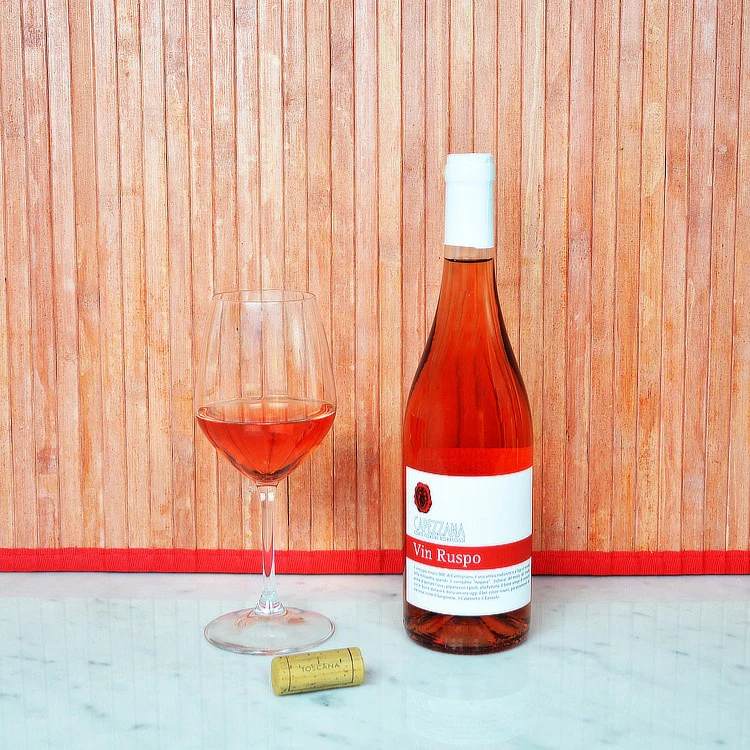
Trebbiano IGT Capezzana, Tasting notes:
Fruity, floral, broad and clean, soft on the palate, harmonious balance between freshness and intensity. Long fruity aftertaste
Vinruspo comes from a blend of sangiovese 75% cabernet 20% canaiolo nero 5%. It is excellent as an introductory wine, accompanied by first courses in general and also with white meats.
Label:
CAPEZZANA
CONTE CONTINI BONACOSSI
VIN RUSPO
Controlled Designation of Origin
ROSATO
ENTIRELY PRODUCED AND BOTTLED BY TENUTA DICAPEZZANA S.R.L CARMIGNANO-ITALY
ORGANIC WINE-PRODUCED IN ITALY
750ml
12.5%
Contains sulphites
Capezzana
At Capezzana they know it well, they have been making wine since 802, not 1802. If you’re looking for the magic formula which makes their wines so special, you’ll find it in the great diversity of each vineyard’s soil and orientation that create extreme and fantastic biodiversity.
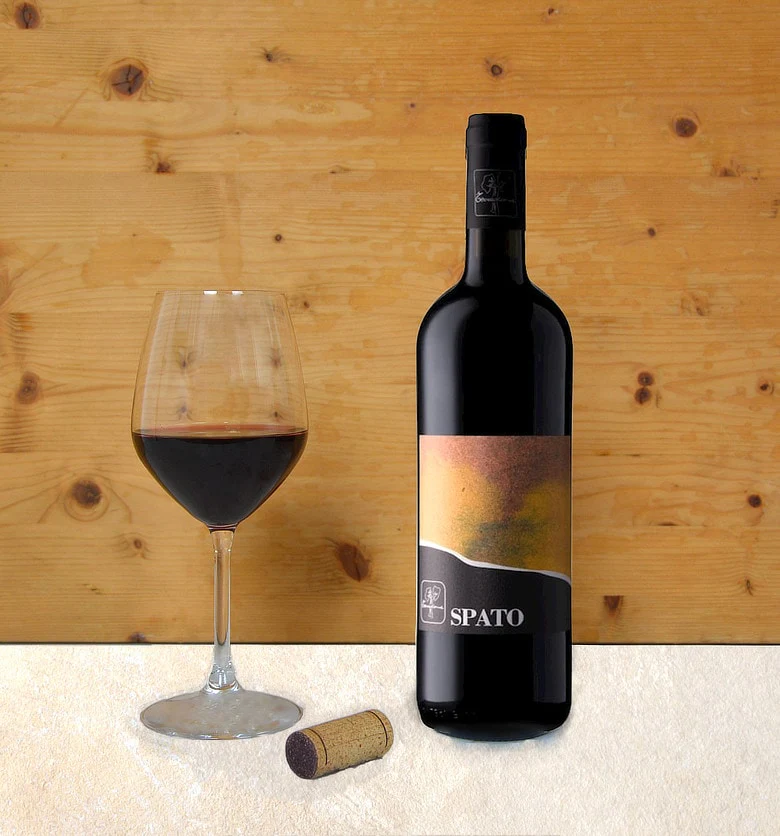
Spato IGT Terradonnà, Tasting notes:
Ruby red, on the nose emerge scents of blackberry, raspberry, candied cherry and berry jam, violet, sweet spices, cinnamon, cloves. Strong impact on the palate with soft and well-integrated tannins, excellent persistence.
In Tuscany, the most famous native grape variety in the world is Sangiovese (100%). On the coast, this grape variety adds to its typical aromas the influence of the proximity of the sea that arrives with its breeze to the hills of Suvereto, making the winter season less harsh.
Label:
TERRADONNÁ SPATO
TUSCAN SANGIOVESE TYPICAL GEOGRAPHICAL INDICATION
Produced and bottled by the TERRADONNA farm, Loc. Notri, 78 Suvereto (LI) Italy.
PRODUCED IN ITALY
750ml
15% Vol
CONTAINS SULPHITES
Terradonnà
Terradonnà is located in Suvereto, in the Val di Cornia, a perfect area for wine production. A perfect area for wine production thanks to a soil particularly rich in minerals and a microclimate that, thanks to the recirculation of air from the sea (just a few kilometers away), maintains a mild climate all year round. The philosophy of the company stems from respect for the environment and the rhythms of nature. Firm in their desire to maintain the traditional cellar with cement tanks and wooden presses, they do not renounce innovation in winemaking techniques and research into methods of working to improve the life of the plants. Tradition and innovation coexist in Terradonnà.